Desserts and Soufflés
Salted Caramel Ganache Tart with Pâte Sablée
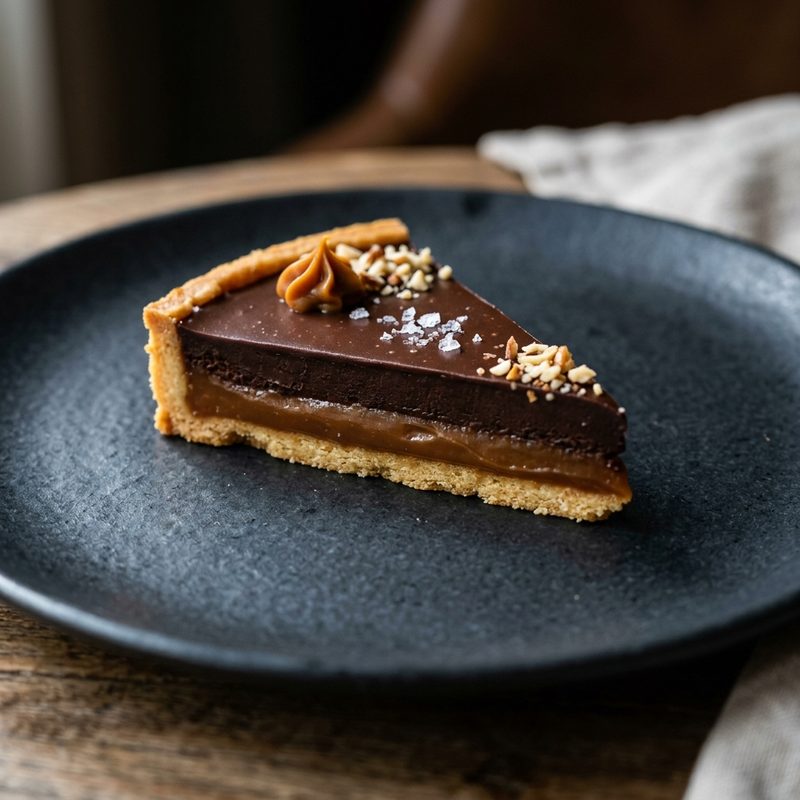
A sophisticated dessert featuring a crisp, buttery Pâte Sablée crust filled with a layer of deep amber salted caramel and topped with a silky 70% dark chocolate ganache. This recipe uses professional-grade techniques to ensure a flawless, high-gloss finish and a perfect balance of salt and bitterness.
- Prep
- 45 min
- Cook
- 25 min
- Serves
- 10
- Level
- Advanced
- Per serving
- 485 kcal
Method
Execute Pâte Sablée using the sablage (sanding) method. Combine flour, icing sugar, almond flour, and cold cubed butter. Pulse or rub until it reaches a fine sandy texture. Add the egg and mix until the dough just coalesces. Wrap and chill at 4°C for at least 2 hours.
Roll the dough to a 3mm thickness and line a 22cm tart ring. Freeze for 20 minutes to prevent shrinkage. Blind bake at 170°C (340°F) for 15 minutes with weights, then remove weights and continue for 10 minutes until fully baked and golden. Allow to cool completely.
Prepare a dry caramel. In a heavy-bottomed pan, melt the granulated sugar gradually over medium heat without stirring until it reaches a deep amber color (185°C). Carefully deglaze with 120ml of warmed heavy cream. Whisk in the 90g of room temperature butter and fleur de sel until smooth. Pour a 5mm layer into the tart shell and refrigerate for 1 hour to set.
Create the ganache emulsion. Finely chop the chocolate. Heat the remaining 200ml cream and glucose syrup to 90°C (just below boiling). Pour over the chocolate and let stand for 2 minutes. Using a spatula, stir in small circles from the center outward to create a perfect emulsion.
Final Assembly. Pour the ganache over the set caramel layer. Gently tap the tart to remove air bubbles and level the surface. Leave to set at a stable room temperature for at least 4 hours. Do not refrigerate during this final set if you want a professional glossy finish.
Notes
Use a digital thermometer for the caramel; 185°C is the sweet spot between complex flavor and burnt bitterness.
The glucose syrup in the ganache is optional for home cooks but essential in a professional kitchen for a flexible, glossy texture that doesn't crack when sliced.
To simplify, you can use a store-bought shortcrust pastry, but you will lose the delicate, melt-in-mouth 'sandy' texture of the authentic Pâte Sablée.
Always warm the cream before adding it to the caramel to prevent the sugar from seizing and creating lumps.