Meat and Game
Authentic French Duck Leg Confit Recipe
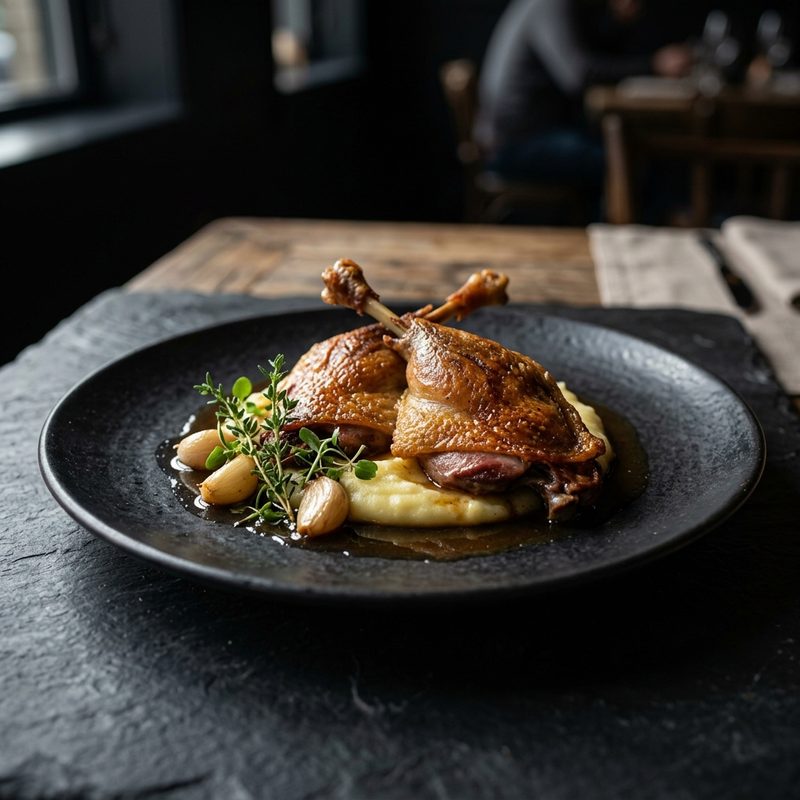
This classic French preparation involves curing duck legs in aromatics before slow-poaching them in their own rendered fat. The result is a silky, tender meat with a perfectly shattered, crisp skin that represents the pinnacle of bistro cooking.
- Prep
- 1440 min
- Cook
- 240 min
- Serves
- 4
- Level
- Intermediate
- Per serving
- 680 kcal
Method
The Cure: Rub the duck legs thoroughly with salt. In a non-reactive tray, place the legs on a bed of half the thyme, garlic, and peppercorns. Cover with the remaining aromatics. Refrigerate for 12 to 24 hours. This draws out moisture and seasons the meat to the bone.
Preparation: Preheat your oven to 95°C (200°F). Rinse the salt and aromatics off the duck legs under cold running water. Pat them extremely dry with paper towels. Failure to dry the legs will lead to steaming rather than confiting.
The Poach: Melt the duck fat in a heavy-bottomed Dutch oven or deep roasting pan. Submerge the duck legs completely in the fat. Ensure no meat is exposed to air. Cover with a parchment paper cartouche and a lid.
Cooking: Place in the oven for 3.5 to 4 hours. The meat is done when it is tender and begins to pull away from the bone, but does not fall off when lifted.
Cooling: Let the duck cool in the fat. For best results, store the duck submerged in the fat in the refrigerator for at least 3 days to allow the flavor to mature.
Finishing: To serve, remove legs from the fat. Place skin-side down in a cold cast-iron skillet. Turn heat to medium-low. Render the skin slowly until it is deep golden and crisp (approx. 8-10 minutes). Flip briefly to warm the underside and serve immediately.
Notes
To simplify at home, you can skip the 24-hour cure and just salt for 2 hours, but you will lose the 'ham-like' depth of flavor and the meat will be less silky.
Never throw away the fat. Filter it through a fine-mesh sieve and store it in the freezer; it can be reused indefinitely and only gets more flavorful.
Use a 'cold start' when crisping the skin. Starting in a cold pan allows the fat under the skin to render out properly without burning the surface.