Risotto and Pasta
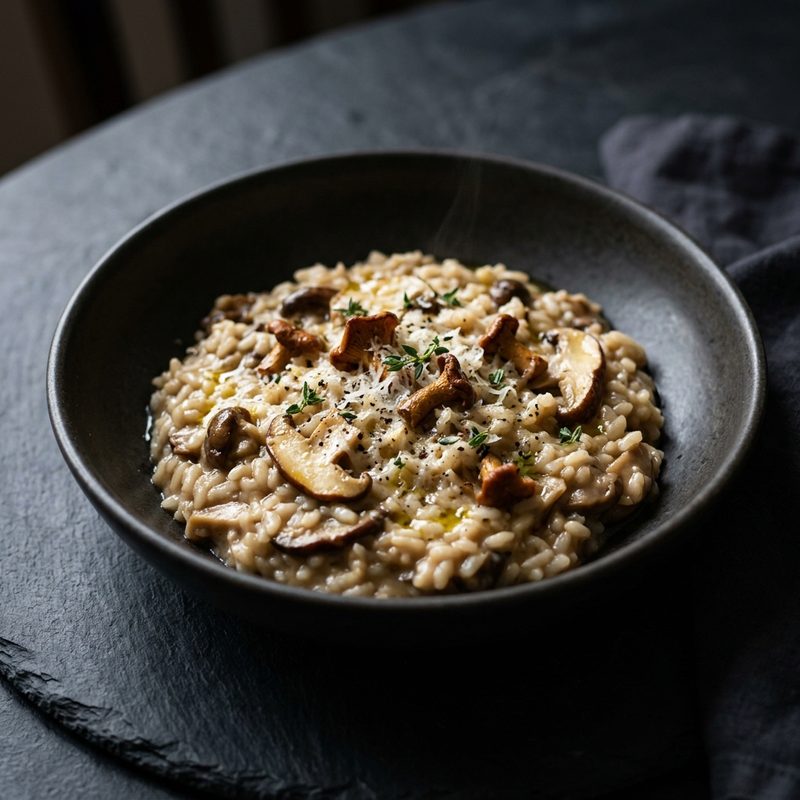
Wild Mushroom Risotto with Aged Parmesan and Thyme
An elegant, velvety risotto showcasing the earthy depth of sautéed forest mushrooms and the rich umami of aged Parmigiano-Reggiano. This recipe utilizes professional techniques like tostatura and mantecatura to ensure a restaurant-quality finish that is perfectly 'all'onda' or flowing like a wave.
- Prep
- 15 min
- Cook
- 30 min
- Serves
- 4
- Level
- Intermediate
- Per serving
- 520 kcal
Method
Mise en Place: Bring the stock to a bare simmer in a small pot; it must remain hot throughout the process to avoid shocking the rice grains. Grate the cheese finely and cube the butter, keeping the butter in the refrigerator until needed.
The Mushrooms: In a wide, heavy-bottomed pan, heat 1 tbsp of olive oil over high heat. Add the mushrooms in a single layer. Sear without moving for 2 minutes to achieve a deep golden crust (Maillard reaction), then toss and cook for another 3 minutes. Season with salt and half the thyme. Remove from the pan and set aside. (Simplification: You can sauté them more gently, but you will lose the concentrated umami and firm texture of a hard sear).
The Soffritto: Lower the heat to medium. Add the remaining olive oil and the shallots. Sweat the shallots for 3-4 minutes until translucent but without any browning. Add the garlic for the final 30 seconds.
Tostatura: Add the Carnaroli rice to the shallots. Stir constantly for 2-3 minutes. This toasts the starch on the outside of the grain, preventing the rice from becoming mushy. The rice is ready when the edges are translucent and the grain is hot to the touch.
Deglaze: Pour in the white wine. Stir until the liquid has completely evaporated and the raw alcohol aroma has vanished.
The Addition: Add the hot stock one ladle at a time (approx. 150ml). Stir frequently but not constantly; the friction of the grains rubbing together is what releases the starch to create the sauce. Wait until the liquid is almost fully absorbed before adding the next ladle. Continue for 18-20 minutes.
Testing for Doneness: At the 17-minute mark, begin tasting. The rice should be 'al dente'—firm to the bite but with no chalky center. Fold the cooked mushrooms back into the rice.
Mantecatura: Remove the pan from the heat. This is the most critical step. Add the chilled butter and the grated Parmigiano-Reggiano. Vigorously beat the mixture with a wooden spoon or by shaking the pan in a back-and-forth motion. This emulsifies the fat with the remaining starch to create a creamy, flowing consistency. If it is too thick, add a small splash of hot stock.
Service: Cover the pan and let it rest for 1 minute. Adjust seasoning with salt and pepper. Plate immediately on flat plates; the risotto should spread out evenly when the bottom of the plate is tapped.
Notes
Use Carnaroli rice over Arborio if possible; it has a higher starch content and holds its shape better during the long cooking process.
Always use cold butter for the mantecatura; the temperature difference helps create a more stable emulsion for a glossier sauce.
The 'all'onda' (at the wave) test: When you shake the pan, the risotto should ripple like a wave. If it stays in a heap, it is too dry.
Do not wash the rice before cooking; you need every bit of that surface starch to create the creamy texture.