Vegetables and Garnishes
Professional Salt-Baked Beetroot Recipe
This technique utilizes a structural salt crust to transform the humble beetroot into a centerpiece of concentrated sweetness and silky texture. By insulating the vegetable, we prevent moisture loss and intensify the natural sugars for a truly refined finish.
- Prep
- 20 min
- Cook
- 90 min
- Serves
- 4
- Level
- Intermediate
- Per serving
- 185 kcal
Method
Mise en place: Preheat your convection oven to 180°C (350°F). Wash the beetroots thoroughly to remove any grit, but do not peel them or trim the root end too closely; leaving 1cm of the stem prevents the juices from 'bleeding' into the salt.
Prepare the salt crust (Sel Gris technique): In a large mixing bowl, whisk the egg whites until they reach soft peaks. Gently fold in the coarse sea salt, thyme leaves, and peppercorns until the mixture resembles wet sand. This creates a structural 'dough' that will harden into an airtight seal.
Encasement: On a heavy-bottomed baking tray, create a 1cm thick bed of the salt mixture. Position the beetroots on the bed, ensuring they do not touch each other. Cover them completely with the remaining salt, molding it around the vegetables to ensure no skin is exposed.
Roasting: Place in the center of the oven and bake for 75–90 minutes. To check for doneness, insert a cake tester through the crust into the center of the largest beet; it should slide in with zero resistance.
Resting: Remove from the oven and allow the beets to rest inside the crust for 20 minutes. This carries over the cooking and allows the internal moisture to redistribute.
Extraction and Peeling: Carefully crack the salt crust using a kitchen mallet or the back of a heavy knife. Remove the beets and, while still warm, use a clean kitchen towel to rub the skins off. The skins should slip off effortlessly.
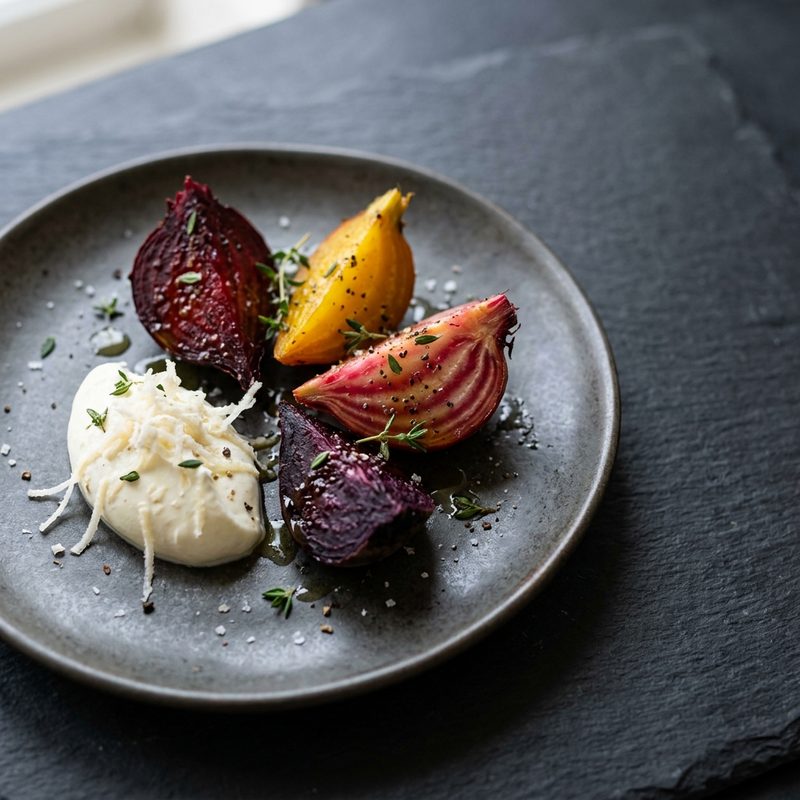
Service: Slice the warm beets into wedges or thin rounds. For the garnish, whisk the crème fraîche until thick, fold in finely grated fresh horseradish, and plate alongside the beets. Finish with a drizzle of high-quality olive oil and a few sprigs of fresh herbs.
Notes
To simplify at home, you can skip the egg whites and just use wet salt, but you will lose the 'mini-oven' pressure seal that creates the superior buttery texture.
Do not throw away the beet greens if they came attached; sauté them with garlic for a secondary garnish.
Always peel while warm; if the beets cool completely, the skins re-adhere to the flesh.
Use different colored beets but bake them in separate salt mounds if you want to prevent the red pigment from staining the yellow or candy-striped varieties.