Guide
How to Build a Professional Pan Sauce: Techniques and Theory
A professional pan sauce transforms the caramelized proteins left in a pan into a velvet-smooth, glossy finish for your meal. This guide provides the precise steps, temperatures, and techniques used in fine-dining kitchens to achieve perfect emulsification.
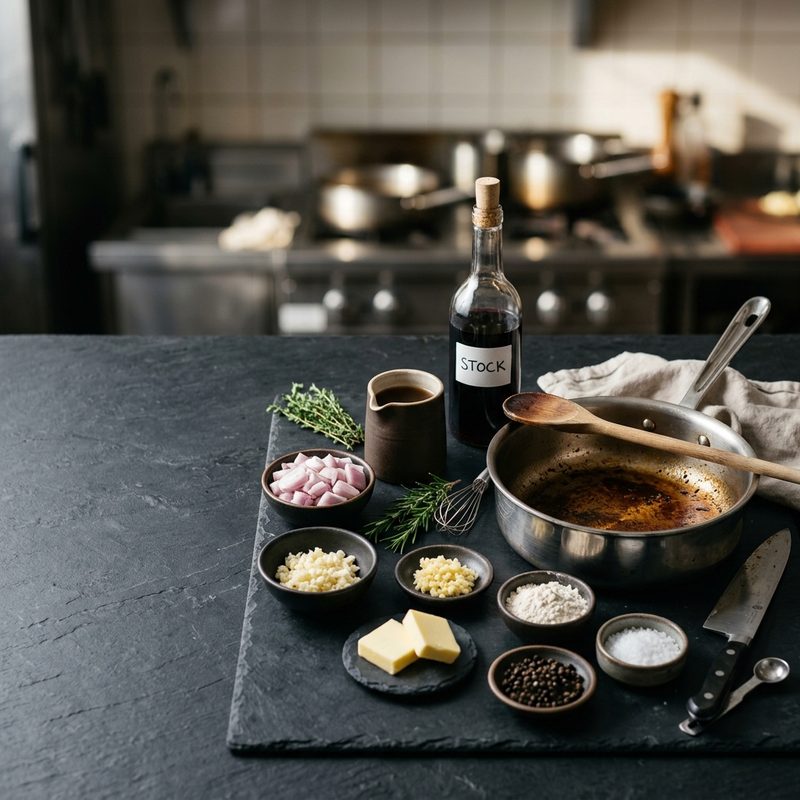
Step 1: The Foundation - Managing the Fond
The success of a pan sauce begins with the 'fond'—the brown, caramelized bits stuck to the bottom of the pan after searing protein. To ensure a quality base, your pan should be between 350°F and 375°F (175°C-190°C) during the sear. If the fond is black, it is carbonized and bitter; discard it. If it is golden to deep brown, it is pure flavor. Remove the protein to a resting rack. If there is more than a tablespoon of fat in the pan, drain the excess, but do not wipe the pan clean.
Step 2: Sweating the Aromatics
Reduce the heat to medium (approx. 300°F/150°C). Add 15g of finely minced shallots and a pinch of salt. Sauté for 45-60 seconds until translucent. Do not brown the shallots; we are looking for sweetness, not more caramelization. If you are using garlic, add it in the last 15 seconds to prevent burning. In a restaurant, we use shallots for their higher sugar content and subtle flavor compared to onions.
Step 3: Deglazing and Reduction
Increase the heat to high and immediately add 60ml to 90ml of deglazing liquid—typically a dry white wine (Sauvignon Blanc) or a fortified wine (Vermouth or Sherry). Use a flat-edged wooden spoon or heat-resistant spatula to scrape the fond into the liquid. This is 'deglazing.' Reduce this liquid 'au sec' (nearly dry) or by at least 75%. This concentrates the acidity and removes the raw alcohol bite. Home cooks often skip the full reduction, resulting in a thin, boozy sauce; do not rush this 2-3 minute window.
Step 4: The Body - Stock Integration
Add 120ml of high-quality brown stock or demi-glace. In a professional kitchen, we use stocks with high gelatin content for natural thickness. Bring to a rapid simmer and reduce by half until the liquid coats the back of a spoon (nappé consistency). If you are at home using store-bought stock, you will lose the 'body' and silkiness that natural gelatin provides, though you can mitigate this by whisking in a teaspoon of unflavored gelatin into your stock before adding it to the pan.
Step 5: Emulsification - Monter au Beurre
This is the critical technical step. Remove the pan from the heat entirely or reduce to the lowest setting. The liquid should be approximately 160°F (71°C). Whisk in 30g of cold, cubed unsalted butter, one piece at a time. This technique, called 'monter au beurre,' creates a stable emulsion. If the sauce boils after the butter is added, the emulsion will break, and the sauce will become greasy and transparent rather than opaque and creamy.
Step 6: The Finish - Seasoning and Pass
Add a few drops of fresh lemon juice or high-quality vinegar to 'lift' the fats. Stir in fresh herbs (chives, tarragon, or parsley). Taste for salt. For a true restaurant finish, pass the sauce through a fine-mesh chinois (strainer) into a warm sauceboat to remove the spent aromatics. This ensures a perfectly smooth mouthfeel.