Amuse-Bouche
Elegant Oyster Foam Recipe with Caviar Pearls
This sophisticated amuse-bouche captures the essence of the ocean in a delicate, ethereal cloud. Briny oyster liquor is transformed into a stable foam and crowned with the rhythmic pop of premium caviar pearls, offering a masterclass in texture and temperature contrast.
- Prep
- 15 min
- Cook
- 10 min
- Serves
- 4
- Level
- Advanced
- Per serving
- 95 kcal
Method
Shuck the oysters carefully, reserving all the natural liquor. Strain the liquor through a fine-mesh chinois lined with a coffee filter to remove any shell fragments or grit. Chill the oyster meats in a small amount of the liquor until service.
In a small saucepan over medium-low heat, sweat the minced shallots until translucent but not browned. Deglaze with the white wine and reduce the liquid by half (approx. 3-4 minutes).
Add the strained oyster liquor and heavy cream to the reduction. Bring to a gentle simmer (80°C / 176°F) for 2 minutes to infuse the flavors. Do not allow it to reach a rolling boil as this will split the proteins in the oyster juice. Remove from heat and strain through a chinois into a tall, narrow container.
Stir in the soy lecithin powder while the liquid is still warm (around 50°C / 122°F). Use an immersion blender at a 45-degree angle, keeping the blades partially submerged to incorporate air. This technique, known as aeration, will create a stable, airy 'espuma' or foam on the surface.
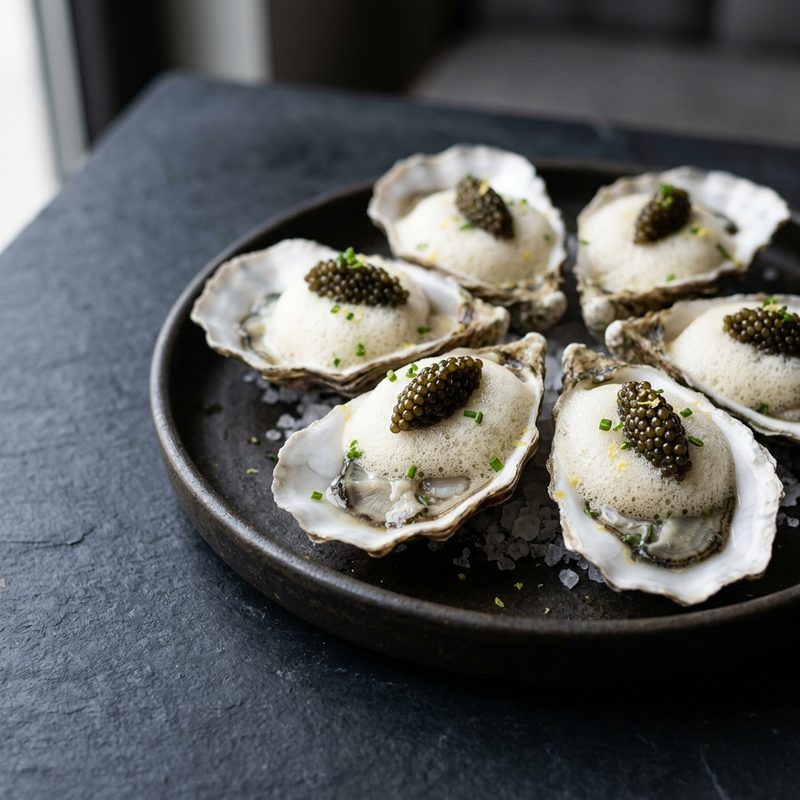
To assemble, place one chilled oyster meat into a chilled glass or a cleaned oyster shell. Add a few drops of lemon juice directly onto the oyster. Carefully spoon the oyster foam over the meat until it is completely submerged in 'clouds'.
Finish by placing a uniform quenelle or teaspoon of caviar pearls on top of the foam. Garnish with a few snips of chives and serve immediately while the foam is at its peak stability.
Notes
Temperature is critical; if the liquid is too hot, the lecithin will lose its foaming power. Aim for 50-60°C when aerating.
For the most stable foam, use a tall, narrow vessel which allows for more air incorporation as the blender creates a vortex.
Simplification: If you cannot find soy lecithin, you can use a whipped cream siphon with one N2O charger. The result will be a denser, creamier mousse rather than a light, airy foam. You lose the translucency and the 'sea-spray' aesthetic.
Poaching option: If you prefer not to serve raw oysters, gently poach the meats in the cream/liquor mixture for 30 seconds before removing and chilling.