Petits Fours
Professional Hazelnut Praline Chocolates Recipe
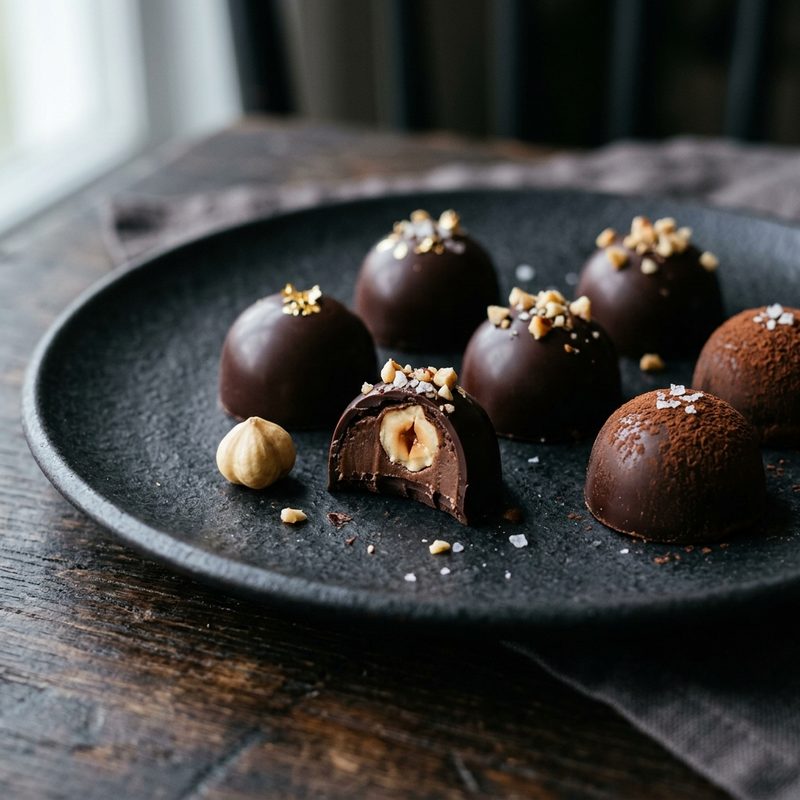
These sophisticated bonbons feature a deep-roasted Piedmont hazelnut praline with a hint of fleur de sel, encased in a thin, crisp shell of dark couverture. Each bite delivers a perfect contrast between the textured, nutty interior and the silk-smooth tempered chocolate exterior.
- Prep
- 60 min
- Cook
- 30 min
- Serves
- 6
- Level
- Advanced
- Per serving
- 680 kcal
Method
Roasting: Preheat a convection oven to 160°C. Roast the blanched hazelnuts on a perforated tray for 12-15 minutes until the internal color is a uniform golden brown. Allow to cool completely to ensure a crisp texture.
Caramelization (Caramel à sec): In a heavy-based saucepan, perform a dry caramel by gradually adding the caster sugar over medium heat. Continue cooking until it reaches 185°C and develops a deep mahogany amber color. Immediately fold in the roasted hazelnuts and fleur de sel, then pour onto a silicone mat to cool and harden.
Praline Production: Break the hazelnut-caramel shards into manageable pieces. Transfer to a high-speed blender or food processor. Pulse initially, then process continuously until the oils release and the mixture transitions from a powder to a fluid paste. For the professional 'crunch' style, stop processing once fluid but before it becomes entirely smooth. Simplification: Use a standard food processor; the result will be slightly grainier than a industrial refiner but the flavor remains intact.
Tempering (Tablage): Melt the dark couverture chocolate to 45°C in a bain-marie. Pour two-thirds of the chocolate onto a marble slab and work with a palette knife until it cools to 27°C. Return it to the remaining warm chocolate and stir gently until the mass reaches a working temperature of 31-32°C. This ensures a professional snap and gloss.
Molding the Shells: Cast the tempered chocolate into clean, room-temperature (20°C) polycarbonate chocolate molds. Tap the sides vigorously to expel air bubbles. Invert the mold over a parchment sheet to drain the excess, creating a thin, even shell. Scrape the mold surface flush with a bench scraper and refrigerate at 12°C for 10 minutes.
Filling and Capping: Transfer the hazelnut praline into a piping bag and fill each set shell, leaving a 2mm headspace at the top. Re-temper the remaining chocolate if necessary and pour over the bases to cap. Scrape flush to ensure a professional finish. Allow to set in a cool environment (15°C) for 45 minutes until the chocolate contracts and naturally releases from the mold.
Notes
Always use a digital probe thermometer for tempering; even 1 degree off can cause the chocolate to bloom or stick to the mold.
If you do not have a marble slab, use the 'seeding' method by stirring in 25% finely chopped un-melted chocolate to the melted mass to lower the temperature.
Piedmont (IGP) hazelnuts are preferred in fine dining due to their high oil content and concentrated aromatic profile.
Ensure the molds are polished with a cotton ball or microfiber cloth before use to achieve a mirror-like shine.