Risotto and Pasta
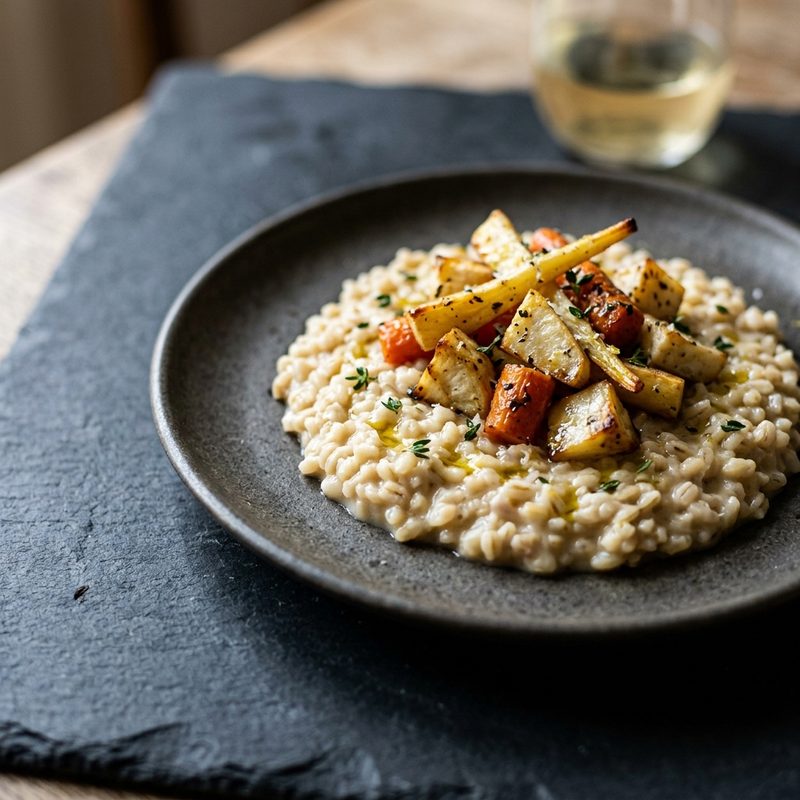
Pearl Barley Risotto with Roasted Root Vegetables
This sophisticated take on a classic risotto replaces Arborio rice with nutty pearl barley for a resilient, toothsome texture. Paired with caramelised root vegetables and finished with a citrus-brightened brown butter, it is a masterclass in balancing earthy autumnal flavors.
- Prep
- 20 min
- Cook
- 50 min
- Serves
- 4
- Level
- Intermediate
- Per serving
- 485 kcal
Method
Preheat oven to 200°C (400°F). Prepare the root vegetables by peeling and dicing into uniform 1cm cubes (mirepoix). Toss with olive oil, thyme leaves, and salt. Roast on a parchment-lined tray for 25 minutes until caramelized and tender. Set aside.
Bring the vegetable stock to a bare simmer in a secondary saucepan. It must remain hot to prevent shocking the grain and stalling the starch release.
In a heavy-based saucepan or cocotte, melt 20g of butter over medium heat. Add the shallot brunoise and sweat (suer) until translucent without color. Add the pearl barley and cook for 3 minutes, stirring constantly to 'toast' (nacrer) the grains until they smell nutty and the edges are slightly translucent.
Deglaze with the white wine (déglacer), scraping any sediment from the bottom. Reduce the liquid by three-quarters until the 'harsh' alcohol scent dissipates.
Begin adding the hot stock one ladle at a time. Stir frequently to encourage the barley to release its starches, creating a creamy emulsion. Unlike Arborio, barley is more resilient, but the technique remains the same. Wait until the liquid is almost absorbed before adding the next ladle. This process takes approximately 35-40 minutes.
Once the barley is 'al dente'—firm but without a chalky center—reduce heat to low. Fold in the roasted root vegetables.
Perform the 'Mantecatura' (finishing). Remove from heat. Vigorously beat in the remaining cold butter and the microplaned Parmesan. If the texture is too stiff, add a small splash of stock to achieve a 'wave' consistency (all’onda). Finish with lemon juice and adjust seasoning with sea salt and cracked black pepper.
Notes
To achieve a true restaurant finish, the butter used in the final step must be cold; this helps create a stable emulsion for a glossier sauce.
Barley takes longer than rice; do not rush the process by boiling the liquid. A gentle simmer is essential for even hydration.
For an advanced variation, deep-fry some sage leaves or parsnip peelings to add a vertical, textural element to the plating.
Simplification: You can boil the barley in stock like pasta and drain it before finishing with butter and cheese, but you lose the creamy starch emulsion that defines a true risotto.