Terrines and Parfaits
Authentic French Duck Rillettes Recipe
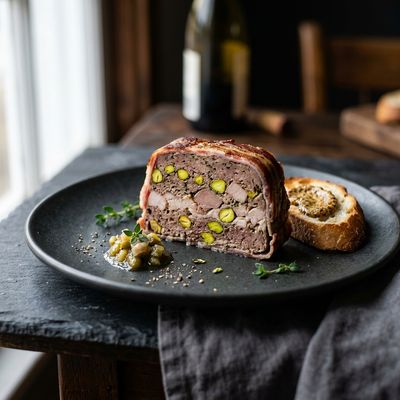
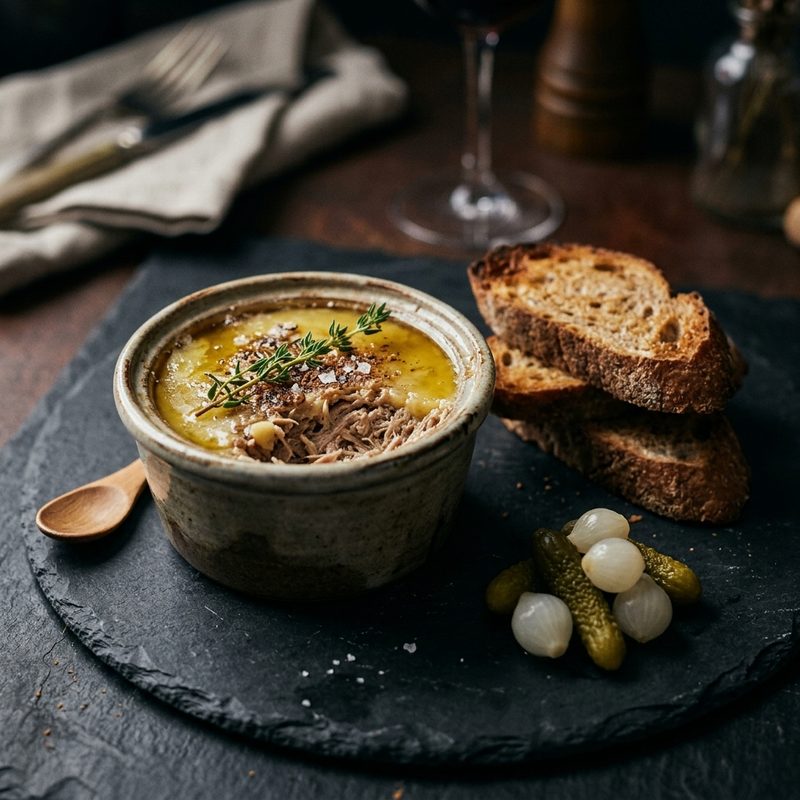
This classic French charcuterie staple features succulent duck leg meat, slow-confit until tender and emulsified with silky duck fat. Seasoned with traditional quatre épices and fresh thyme, these rillettes offer a rich, melt-in-the-mouth texture perfect for crusty sourdough.
- Prep
- 30 min
- Cook
- 240 min
- Serves
- 12
- Level
- Medium
- Per serving
- 310 kcal
Method
Curing the Meat: Combine the salt and quatre épices. Rub the duck legs thoroughly with the spice mix, place in a non-reactive tray with thyme and garlic, cover, and refrigerate for 12 to 24 hours. This draws out moisture and seasons the meat to the bone.
The Confit: Rinse the salt and aromatics off the duck legs and pat them completely dry. Submerge the legs in rendered duck fat in a heavy-bottomed Dutch oven. Cook in a 95°C (200°F) oven for approximately 4 hours, or until the meat is completely tender and pulls away from the bone with no resistance. Ensure the fat never reaches a boil; it should only barely shimmer.
Shredding: Remove the legs from the fat. Once cool enough to handle but still warm, remove and discard the skin, bones, and gristle. Shred the meat by hand or with a fork into bite-sized fibers—do not over-process into a paste.
Emulsification: Place the shredded meat in a chilled bowl. Slowly fold in about 150ml of the warm confit fat and any 'jus' (the dark liquid at the bottom of the fat) using a spatula. Add the sweated shallots. Stir vigorously over an ice bath until the fat begins to set and creates a creamy, spreadable emulsion with the meat.
Potting and Maturation: Pack the mixture into sterilized jars, pressing down to remove air pockets. Pour a 5mm layer of melted duck fat over the top to seal. Refrigerate for at least 3 days before serving to allow the flavors to mature and the texture to stabilize.
Notes
Always shred the duck while it is warm; if the meat cools completely, the fibers will snap rather than pull, resulting in a poor texture.
The 'jus'—the brown liquid that settles under the fat after confit—is flavor gold. Ensure some of this is incorporated into the rillettes for seasoning.
Simplification: You can use a slow cooker on 'low' for the confit step. However, you lose the ability to precisely monitor the 95°C temperature, which can lead to the meat becoming slightly stringy if it gets too hot.
For the best flavor, serve at room temperature. Cold rillettes will be too firm and the fat will mask the spices.