Meat and Game
Pan-Seared Duck Breast with Cherry and Thyme Recipe
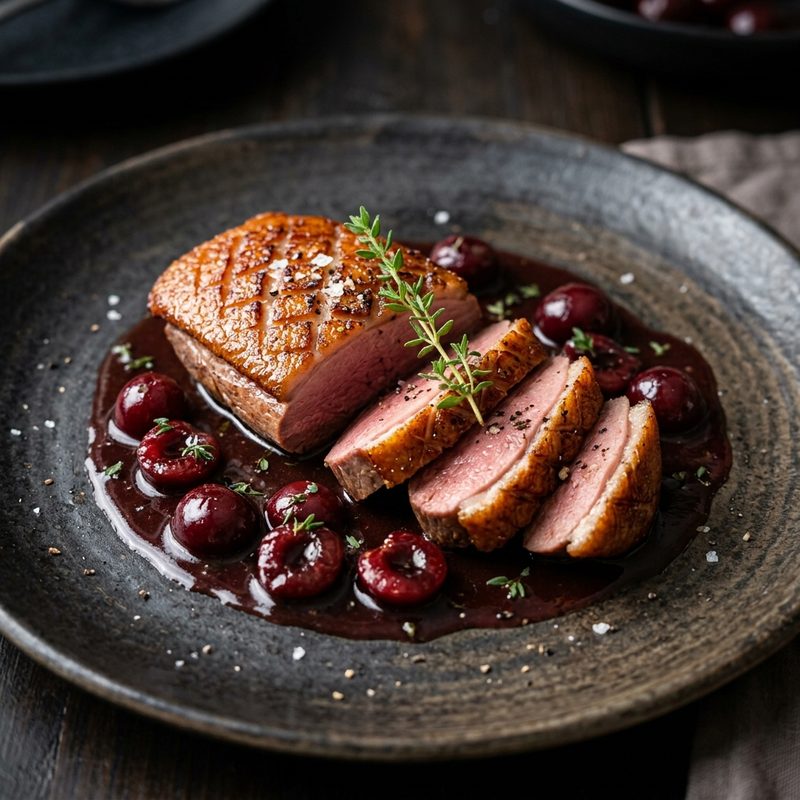
Experience the classic combination of succulent, crispy-skinned duck breast and the vibrant, acidic sweetness of a cherry gastrique. This recipe focuses on precision rendering and sauce emulsification to deliver a restaurant-quality main course.
- Prep
- 15 min
- Cook
- 25 min
- Serves
- 4
- Level
- Advanced
- Per serving
- 520 kcal
Method
Temper the meat. Remove duck breasts from refrigeration 30 minutes prior to cooking. Pat the skin extremely dry with lint-free towels.
Precision Scoring. Using a sharp protein knife, score the fat in a 3mm diamond pattern. Do not penetrate the flesh; if the meat is cut, moisture will escape and the breast will toughen.
Cold-Pan Rendering. Place the duck skin-side down in a cold, heavy-based stainless steel skillet. Increase heat to medium-low. Allow the fat to render slowly for 10-12 minutes, periodically pouring off excess liquid fat into a ramekin. The goal is a wafer-thin, glass-like skin.
Sealing the Flesh. Once the skin is deep mahogany and crisp, turn the heat to high. Sear the flesh side for exactly 2 minutes to reach an internal temperature of 52°C (125°F) for medium-rare.
Mandatory Rest. Transfer duck to a warm plate, tent loosely with foil, and rest for 8-10 minutes. This allows fibers to relax and redistribute juices. Skip this, and the meat will bleed on the plate.
Construct the Gastrique. In a clean saucepan, melt sugar over medium heat until it forms a light amber caramel (dry caramel technique). Deglaze with red wine vinegar, stirring until the caramel dissolves.
Reduction. Add the cherries, duck stock, and 2 sprigs of thyme. Reduce by half until the liquid coats the back of a spoon (nappe consistency).
Monte au Beurre. Remove from heat. Whisk in cold butter cubes one at a time to emulsify the sauce, providing a glossy finish and rich mouthfeel. Adjust seasoning with sea salt.
Service. Carve the duck breast on a bias into 1cm slices. Fan onto warmed plates and spoon the cherry gastrique and fruit over the center.
Notes
To simplify at home, use store-bought chicken stock instead of duck stock, though you will lose the deep, gamey complexity of the sauce.
If using frozen cherries, thaw and drain them thoroughly first to avoid excess water diluting the gastrique.
Always start duck in a cold pan; starting in a hot pan seizes the fat and prevents it from rendering out properly, resulting in a rubbery texture.
Save the rendered duck fat; it is high-quality culinary 'liquid gold' for roasting potatoes.