Vegetables and Garnishes
Glazed Heritage Carrots: Professional French Glazing Technique
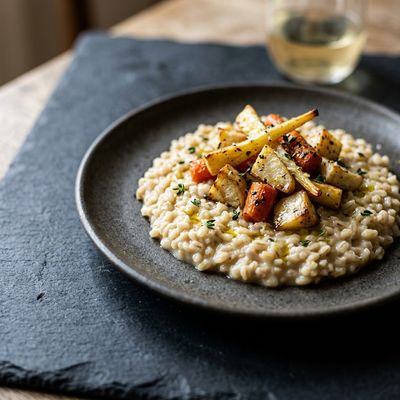
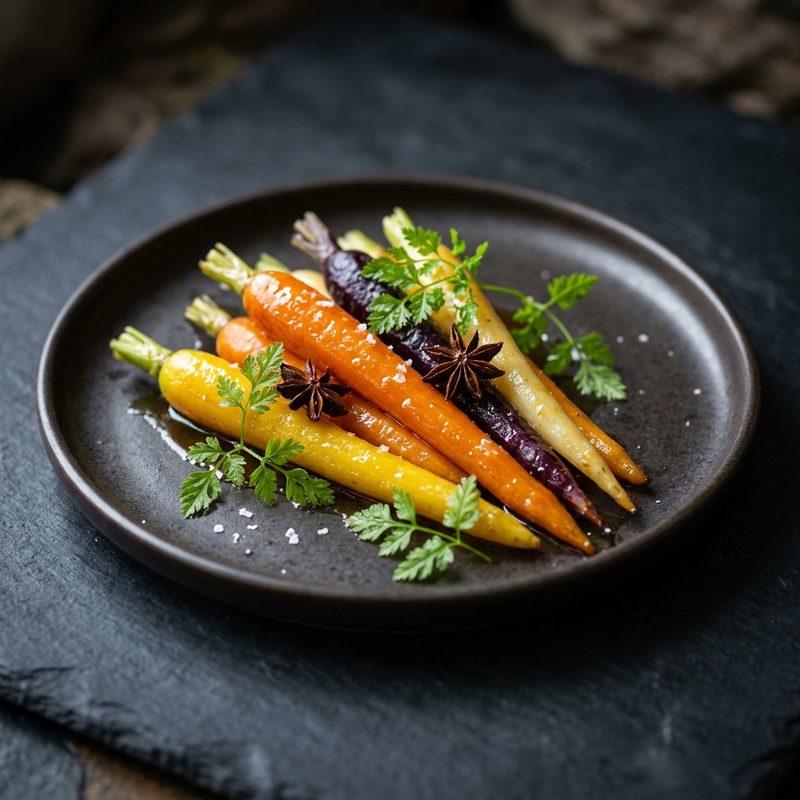
Unlock the vibrant potential of multi-colored heritage carrots using the classic French 'glacer à blanc' technique. This method creates a translucent, silk-like emulsion of butter and honey that concentrates the natural sugars of the root while maintaining a perfect 'fondant' texture.
- Prep
- 15 min
- Cook
- 20 min
- Serves
- 4
- Level
- Medium
- Per serving
- 185 kcal
Method
Mise en place: Peel the heritage carrots carefully. If they are thick, halve them lengthwise to ensure uniform cooking. Keep the 1cm green 'handle' intact for aesthetic presentation. Wash thoroughly to remove any grit from the base of the stems.
Prepare a 'cartouche': Cut a circle of parchment paper the same diameter as your wide sautoir (flat-bottomed pan). Fold it into eighths, snip the tip to create a central steam hole, and trim the outer edge to fit the pan.
Arrangement: Place carrots in the pan in a single layer. Do not crowd them. Add the cold butter, honey, star anise, and sea salt.
Initial Cooking: Pour in the liquid (water or stock) until it reaches exactly halfway up the sides of the carrots. Place the cartouche directly on top of the carrots to regulate evaporation.
Emulsification: Bring to a gentle simmer over medium heat. Cook for 12–15 minutes. The cartouche traps enough steam to cook the tops while the liquid reduces into a glaze. At the 12-minute mark, check the carrots with a paring knife; they should be 'fondant' (tender but with a slight resistance at the core).
Finishing: Remove the cartouche and the star anise. Increase heat slightly. Gently shake the pan in a circular motion to emulsify the remaining liquid and butter. This 'monter au beurre' effect creates the glossy finish. If the glaze looks oily, add a teaspoon of water to bring the emulsion back together.
Plating: Lift carrots onto a warm plate, spoon over the remaining glaze, and garnish with fresh chervil.
Notes
The Cartouche: Professional kitchens use a parchment lid rather than a metal one because it allows for a controlled release of steam, preventing the carrots from boiling while ensuring the glaze reduces at the same rate the vegetables cook.
Glacer à Blanc vs. Glacer à Brun: This recipe uses the 'white glaze' method. To 'glacer à brun', continue cooking after the liquid has evaporated until the sugars lightly caramelize, resulting in a deeper amber color.
Rescue the Glaze: If the glaze breaks (looks like oil and water), the temperature was too high. Remove from heat immediately, add a splash of cold water, and whisk/shake vigorously to reform the emulsion.
Simplification: If you don't want to make a cartouche, you can cook with a standard lid slightly ajar, but you lose the evenness of the glaze and the specific 'fondant' texture.