Terrines and Parfaits
Professional Ham Hock and Parsley Terrine Recipe
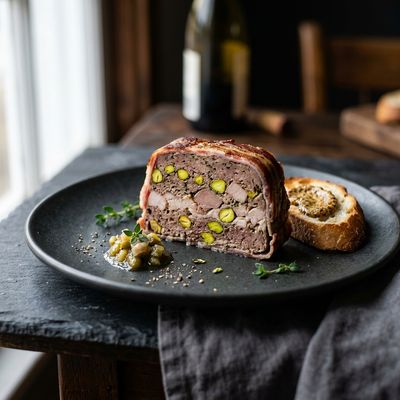
An elegant expression of French charcuterie, this terrine combines tender, slow-braised ham hock with a vibrant parsley infusion and a crystal-clear natural jelly. It is a masterclass in texture, balancing salty, savory pork with the sharp acidity of vinegar and mustard.
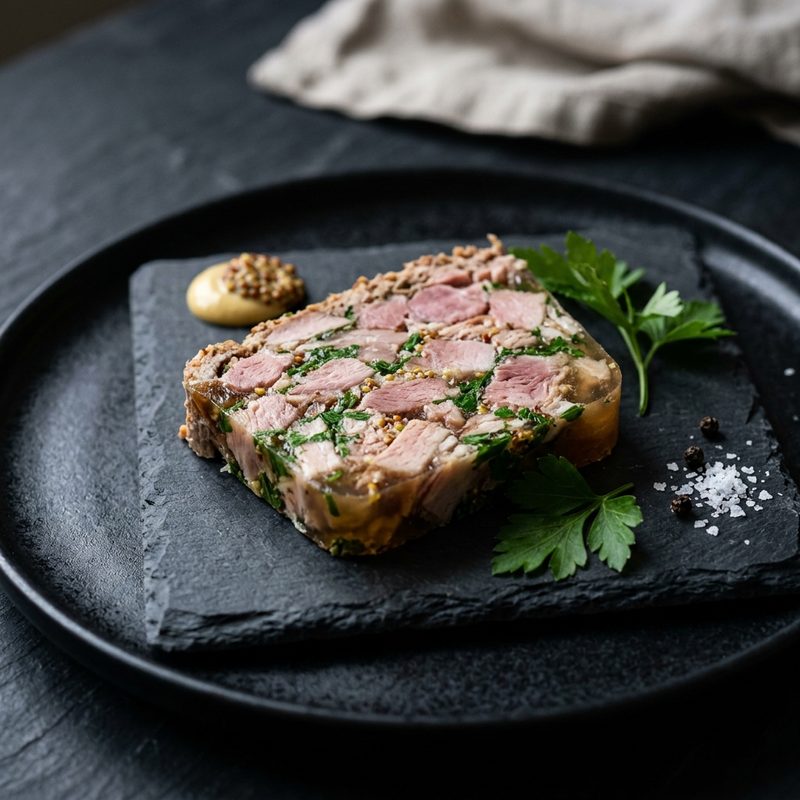
- Prep
- 45 min
- Cook
- 240 min
- Serves
- 10
- Level
- Intermediate
- Per serving
- 285 kcal
Method
Desalination: Submerge ham hocks in cold water for 12 hours, changing the water twice. This is critical for controlling the final salinity of the terrine.
The Braise: Place hocks, carrots, celery, charred onion, garlic, peppercorns, and bay leaves in a large stockpot. Cover with cold water. Bring to a simmer, then immediately reduce heat to 90°C (195°F). Perform a 'dépouillage' by skimming any surface impurities. Cover with a cartouche and simmer for 3.5 to 4 hours until the meat is 'falling-off-the-bone' tender.
Clarification: Remove hocks and set aside to cool slightly. Strain the cooking liquor through a chinois lined with a double layer of muslin (cheesecloth). Measure 600ml of this liquid and reduce by one-third in a clean pan. If the liquid does not feel very sticky on your fingers, bloom and dissolve 2 sheets of gelatin into the hot liquid. Stir in the white wine vinegar.
Picking the Meat: While the meat is still warm (approx 50°C), pick it from the bones. Discard skin, large fat deposits, and gristle. Break the meat into large, natural flakes. Do not shred; texture is paramount. Combine the meat in a bowl with the Dijon mustard and the finely chopped parsley, tossing gently to coat.
Assembly: Line a 1.5-liter terrine mold with high-quality cling film, ensuring enough overhang to cover the top. Pack the seasoned ham and parsley mixture into the mold, pressing down firmly to remove air pockets. Pour the reduced stock over the meat until it just reaches the top of the meat line.
Pressing: Fold the overhanging cling film over the top. Place a piece of cardboard cut to the size of the mold opening on top, then weigh it down with 1kg of weight (cans or kitchen weights). Chill in the refrigerator for a minimum of 12 hours, ideally 24.
Service: To serve, dip the mold briefly in hot water to loosen the gelatin, then invert and slice with a very sharp, warm knife. Serve at 10-12°C to allow the flavors to bloom.
Notes
Charring the onion halves face-down in a dry pan before adding to the stock adds a deep golden hue and smoky complexity to the jelly.
Always pick the meat while warm. Once the pork fats cool, they become difficult to separate from the lean meat, resulting in a greasy mouthfeel.
Home simplification: You can skip the 'pressing' step if you prefer a looser, more rustic terrine, but you will lose the clean, professional slice.
If the stock is cloudy, you can perform a professional clarification using an egg-white raft, though a fine muslin strain is usually sufficient for this style.