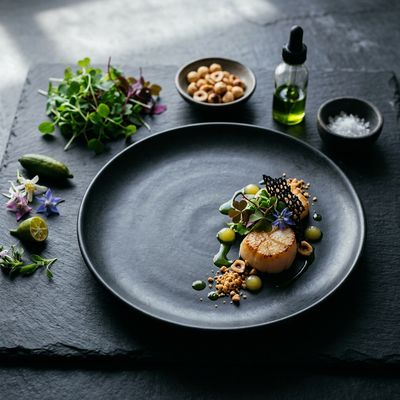
Stocks, Sauces and Fundamentals
Professional Grade Vibrant Herb Finishing Oil
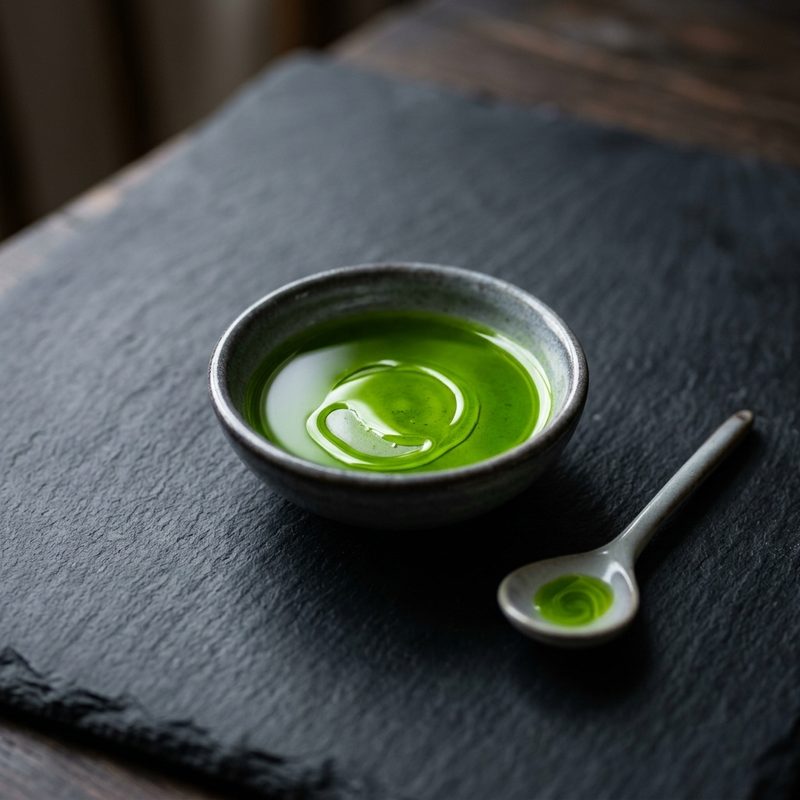
A striking, neon-green finishing oil that captures the high-definition essence of fresh aromatics. Using professional high-speed friction and rapid stabilization, this oil provides a clean, intense herb profile and a crystal-clear aesthetic for plating.
- Prep
- 15 min
- Cook
- 10 min
- Serves
- 20
- Level
- Intermediate
- Per serving
- 160 kcal
Method
Blanching and Refreshing: Bring a large pot of salted water to a rolling boil. Prepare a large basin with ice and water. Submerge the herb leaves in the boiling water for exactly 15 seconds until vibrant green. Immediately transfer them to the ice bath to halt the cooking process and lock in the chlorophyll.
Dehydration: Once chilled, remove the herbs and squeeze out as much water as possible. Place the herbs in a clean kitchen towel and wring them tightly until they are almost bone-dry. Any residual moisture will cloud the oil and decrease shelf life.
Mechanical Extraction: Place the dried herbs and the neutral oil into a high-speed blender (e.g., Vitamix). Start on the lowest speed and quickly ramp up to maximum.
Friction Heating: Blend on high for 2 to 3 minutes. The friction of the blades will heat the oil. Use a probe thermometer to monitor the temperature; you are aiming for exactly 60°C (140°F). This specific temperature breaks the cell walls to release pigment without oxidizing the flavor. (Home simplification: if you lack a high-speed blender, blend as fine as possible, but you will lose some color intensity).
Rapid Stabilization: Immediately pour the hot oil into a stainless steel bowl nestled within a larger bowl of ice (an ice-well). Stir constantly until the oil is cold to the touch. This rapid cooling preserves the 'neon' green hue.
Clarification: Once fully chilled, pour the oil into a fine-mesh chinois or sieve lined with a coffee filter. Allow the oil to gravity-strain in the refrigerator overnight. Do not press or force the solids, as this will result in a cloudy oil. Store in a dark squeeze bottle or UV-protected glass in the refrigerator.
Notes
Ensure the herbs are completely dry after the ice bath; water is the primary cause of oil spoilage and cloudiness.
Grapeseed oil is preferred over olive oil for its neutral flavor profile and because olive oil can become bitter when processed at high speeds in a blender.
Skipping the blanching step (Step 1) results in a 'raw' herb oil. While the flavor is sharper, the oil will oxidize and turn brown within 24 hours.
Always use a stainless steel bowl for cooling; plastic retains heat and will dull the color of the oil.