Amuse-Bouche
Professional Parmesan Gougères Recipe
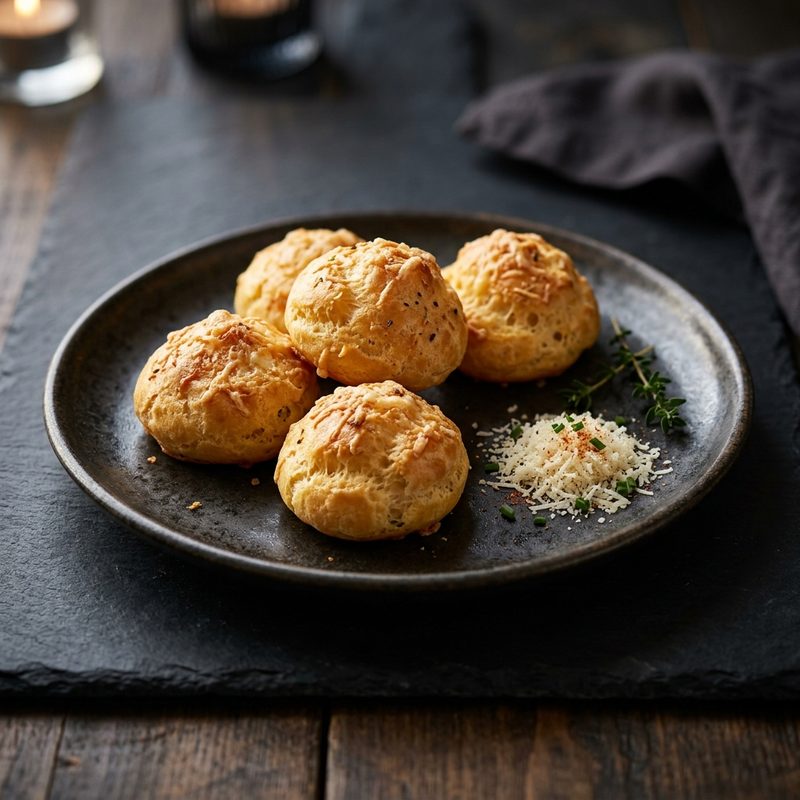
These elegant French cheese puffs feature a delicate, crisp exterior and a light, hollow center infused with aged Parmesan and a hint of nutmeg. Served warm, they offer the perfect balance of savory richness and ethereal texture.
- Prep
- 15 min
- Cook
- 30 min
- Serves
- 4
- Level
- Medium
- Per serving
- 515 kcal
Method
Preheat a convection oven to 200°C (400°F). Line two heavy-gauge baking sheets with silicone mats or parchment paper.
Combine milk, water, butter, and salt in a heavy-bottomed saucepan over medium heat. Bring to a full rolling boil.
Immediate Incorporation: Remove from heat and add all sifted flour at once. Stir vigorously with a stiff spatula until the flour is fully hydrated and no dry pockets remain.
Desiccate the Panade: Return the pan to medium heat. Cook the dough for 2-3 minutes, stirring constantly and smashing it against the sides. This removes excess moisture, ensuring a better rise. Stop when a thin, dry film forms on the bottom of the pan.
Cooling: Transfer the dough to a stand mixer fitted with the paddle attachment. Mix on low speed for 60 seconds to release the initial steam and cool the panade slightly to prevent the eggs from scrambling.
Emulsification: With the mixer on medium-low, add eggs one at a time. Ensure each egg is fully incorporated before adding the next. Watch for the 'v-drop' consistency: the dough should be glossy and fall off the paddle slowly, leaving a V-shaped trail. You may not need all of the last egg.
Fold in Aromatics: Gently fold in 80g of the Parmigiano-Reggiano, the nutmeg, and the cayenne by hand until evenly distributed.
Piping: Transfer the batter to a pastry bag with a 1cm plain round tip. Pipe 3cm mounds onto the prepared sheets, spaced 5cm apart. Top each mound with the remaining grated cheese.
Technical Bake: Place in the oven and immediately reduce heat to 175°C (350°F). Bake for 25-30 minutes. Do not open the oven door during the first 20 minutes as this will cause collapse. The gougères are done when they are deeply golden and feel light and hollow.
Finishing: Prick the side of each puff with a small paring knife immediately upon removal to release internal steam. Serve warm.
Notes
Always weigh your eggs; the difference between 4 large and 4 extra-large eggs can break the emulsion and prevent the pastry from rising.
If you don't have a stand mixer, you can incorporate the eggs by hand with a wooden spoon. This is achievable but requires significant physical effort; you lose the perfect uniformity of the emulsion that a machine provides.
Ensure the cheese is grated on a microplane; large shreds will weigh down the dough and prevent it from expanding properly.
Use bread flour instead of all-purpose for a sturdier structure and higher rise, though the crumb will be slightly more chewy than tender.