Guide
How to Create Stable Culinary Emulsions That Never Split
Understanding the science of emulsions is the difference between a broken sauce and a silk-smooth finish. This guide provides the precise temperatures, ratios, and mechanical techniques used in professional kitchens to ensure your sauces remain stable from pass to plate.
The Physics of the Emulsion
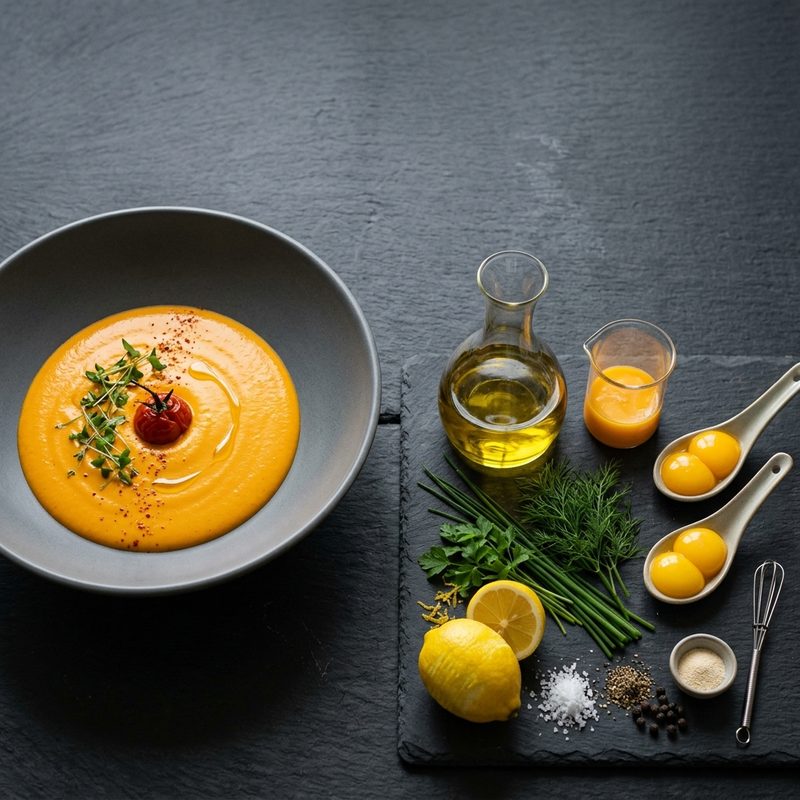
An emulsion is a forced marriage between two liquids that naturally repel: oil (fat) and water (acid/moisture). In a kitchen environment, we achieve this through 'mechanical shear'—breaking the fat into microscopic droplets—and the addition of an 'emulsifier,' usually lecithin found in egg yolks or mustard. To prevent a split, you must control the rate at which the dispersed phase (the fat) is introduced to the continuous phase (the base liquid).
Temperature Control: The Critical Range
For warm emulsions like Hollandaise or Béarnaise, temperature is your primary failure point. You must maintain your base between 60°C and 65°C. Below 55°C, the butterfat solidifies, causing the sauce to seize; above 70°C, the proteins in the egg yolk coagulate (scramble), losing their ability to hold the fat. Use a digital probe thermometer. If you are at home and do not have a bain-marie, use a bowl over a pot of simmering water, but ensure the water does not touch the bottom of the bowl to avoid hot spots.
The Sabayon Base and Fat Integration
Start by whisking your yolks and acid (reduction or lemon juice) over heat until they reach the 'ribbon stage'—this is a sabayon. It should be pale, thick, and tripled in volume. Once at 62°C, begin adding your clarified butter. In a restaurant, we add the first 20% drop by drop. This creates the initial seed of the emulsion. Once a stable 'nucleus' is formed, you can increase to a thin, steady stream. If the sauce looks oily or 'tight,' whisk in a teaspoon of warm water immediately to loosen the continuous phase.
Cold Emulsions and Mechanical Shear
For Mayonnaise or Aioli, the technique shifts to mechanical power. Using a high-speed immersion blender or food processor provides more shear than a hand whisk, creating smaller fat droplets and a more stable bond. Always start with your yolks, mustard, and acid at room temperature. Cold oil introduced to cold yolks can result in a 'short' texture that splits easily. If simplifying at home by using a whisk, be prepared for a less dense structure; the tradeoff for speed is a loss of that 'pudding-like' professional thickness.
The Recovery Protocol
If a sauce splits, do not discard it. To rescue a broken emulsion, take a clean bowl and add one tablespoon of warm water (for warm sauces) or a fresh egg yolk. Slowly, whisk the broken sauce into the new base as if it were the oil. This re-establishes the emulsion by providing a fresh continuous phase with ample emulsifiers to recapture the stray fat molecules.