Risotto and Pasta
Authentic Risotto alla Milanese with Saffron and Beef Marrow
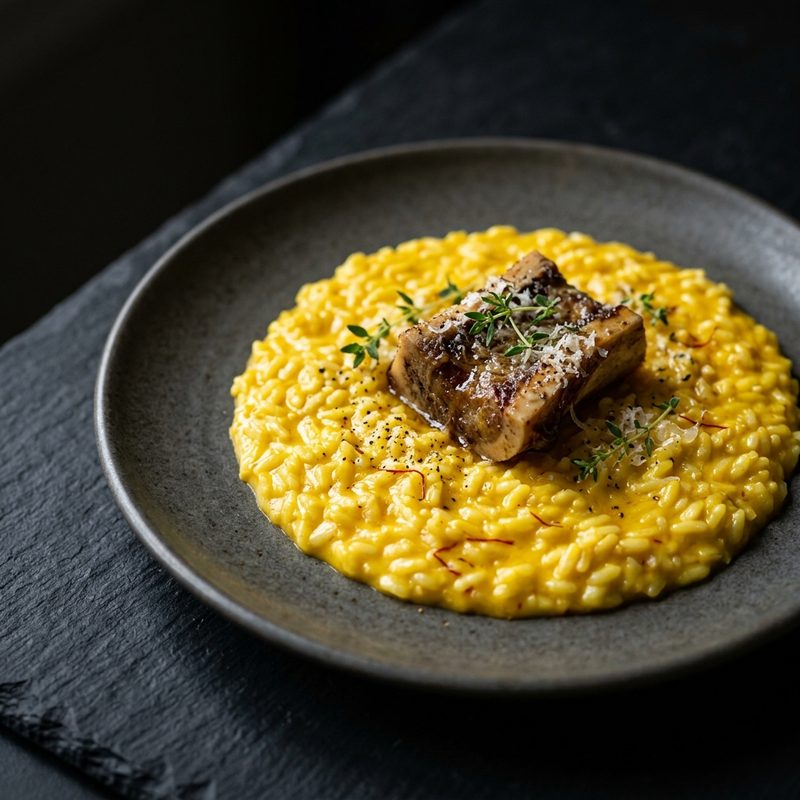
A luminous, velvet-textured masterpiece where high-grade saffron meets the richness of beef marrow and aged Parmigiano-Reggiano. This recipe focuses on the essential 'all’onda' movement to achieve the perfect restaurant-standard consistency and grain integrity.
- Prep
- 15 min
- Cook
- 25 min
- Serves
- 4
- Level
- Intermediate
- Per serving
- 580 kcal
Method
Preparation of the Infusion. At least 20 minutes before cooking, crush the saffron threads slightly and steep them in 50ml of warm stock to extract maximum pigment and aroma. Keep the remaining stock at a constant simmer (approx. 85°C).
The Soffritto. In a heavy-bottomed wide pan (copper or thick stainless steel), melt 20g of the butter and the beef marrow. Add the shallot brunoise and sweat over low heat (approx. 110°C) until translucent. Do not allow any browning or caramelization to occur.
The Tostatura. Increase heat to medium. Add the Carnaroli rice. Stir for 3 minutes until the grains are hot to the touch and the edges become translucent. This seals the starch and prevents the rice from turning mushy. (Simplification: Omit marrow if unavailable; you lose the traditional 'animal' depth and silky mouthfeel).
The Sfumare. Pour in the white wine. Stir constantly until the liquid has evaporated completely and the 'raw alcohol' scent has vanished.
The Cottura. Add the simmering stock one ladle at a time. The rice must be submerged but not drowning. Stir frequently to encourage starch release. Halfway through (about 8-10 minutes in), add the saffron infusion. Continue adding stock as it is absorbed.
The Mantecatura. At the 16-17 minute mark, test the grain. It should be 'al dente'—firm but cooked through. Remove the pan from the heat. This is critical. Vigorously beat in the remaining cold, cubed butter and the Parmigiano-Reggiano. Use a wooden spoon to create a circular 'wave' motion (all’onda). This emulsifies the fats with the starchy liquid to create a cream.
Resting. Cover the pan and let it sit for 2 minutes. This allows the temperature to equalize and the texture to set. Adjust seasoning with sea salt only if necessary. The result should flow across the plate when tilted, rather than sitting in a stiff mound.
Notes
Always use Carnaroli or Vialone Nano over Arborio for fine dining; they have higher starch content and better structural integrity.
The butter for mantecatura must be ice-cold. The temperature difference between the hot rice and cold fat helps create a stable, glossy emulsion.
Never use a lid during the cooking process; you need to control evaporation and stir to develop the starch.
If the risotto is too thick after resting, add one tablespoon of hot stock to loosen it to the 'all'onda' (wavy) consistency.