Stocks, Sauces and Fundamentals
Classic French Beurre Blanc Sauce Recipe
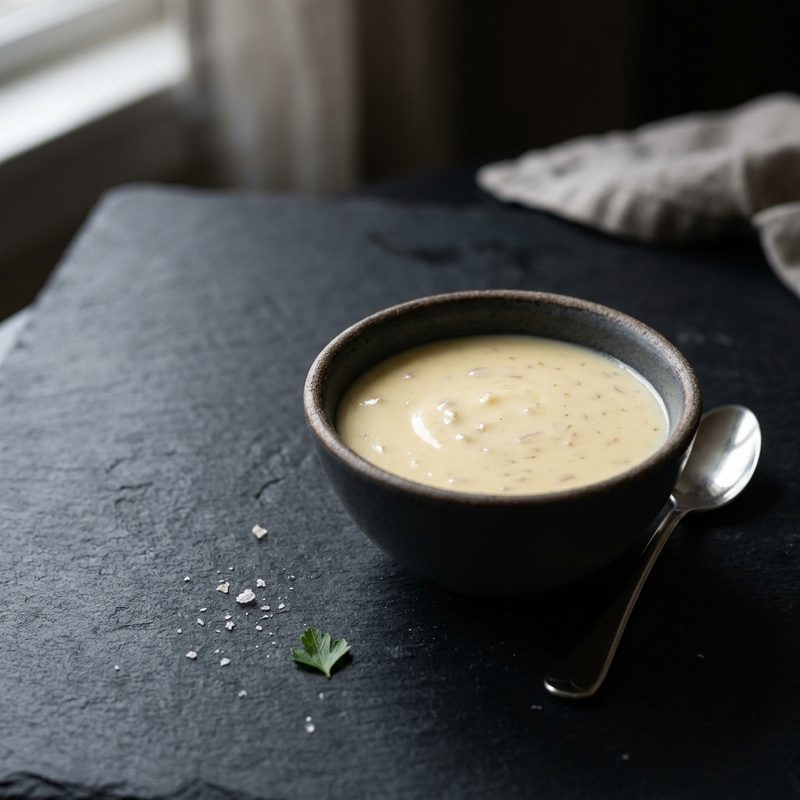
A cornerstone of French saucier craft, this Beurre Blanc is a luxurious, velvet-smooth emulsion of high-quality butter and a bright shallot reduction. Perfectly balanced with acidity and rich fat, it is the definitive accompaniment for poached fish and delicate seafood.
- Prep
- 15 min
- Cook
- 30 min
- Serves
- 4
- Level
- Medium
- Per serving
- 425 kcal
Method
Ciseler (finely mince) the shallots to approximately 2mm uniform pieces to ensure even flavor extraction and prevent large chunks in the reduction.
In a small, heavy-bottomed stainless steel saucepan, combine the minced shallots, dry white wine, and white wine vinegar. Bring to a simmer over medium heat.
Perform a reduction 'au sec' (meaning 'nearly dry'). Reduce the liquid until only about 15ml remains; it should look like a syrupy glaze surrounding the shallots. Watch carefully at the end to avoid scorching.
(Professional Trick): Add the heavy cream. Reduce the cream by half until it is thick and bubbly. While purists might skip this, the milk proteins in the cream act as a stabilizer, making the emulsion significantly more 'bulletproof' and resistant to breaking.
Reduce the heat to the lowest possible setting. Using a wire whisk, begin the 'monter au beurre' (mounting with butter) process. Add 2 cubes of cold butter at a time, whisking constantly.
Control the temperature by moving the pan on and off the heat. The butter should melt into a thick, pale yellow emulsion. If the sauce begins to look oily, it is too hot; whisk in a cold butter cube away from the heat immediately.
Maintain the sauce temperature between 110°F and 130°F (43°C-54°C). Once all butter is incorporated, remove from the heat.
Pass the sauce through a fine-mesh chinois or sieve into a warm bowl. Use a ladle to press the shallot solids to extract all the liquid, then discard the solids. (Home simplification: skip straining if you enjoy the texture of the shallots, but the professional standard requires a perfectly smooth sauce).
Season with fine sea salt, white pepper (to maintain the pale color), and a few drops of lemon juice to adjust the final acidity.
Notes
Always use cold butter directly from the refrigerator; the gradual melting allows the fat to emulsify with the water content rather than separating.
A heavy-bottomed saucepan is essential for even heat distribution to prevent the delicate emulsion from breaking.
Use white pepper instead of black pepper to ensure there are no dark specks in your elegant, ivory-colored sauce.
If the sauce breaks (the fat separates), whisk in a teaspoon of cold heavy cream or a tiny splash of hot water to pull the emulsion back together.