Petits Fours
Professional Recipe for Canelés de Bordeaux
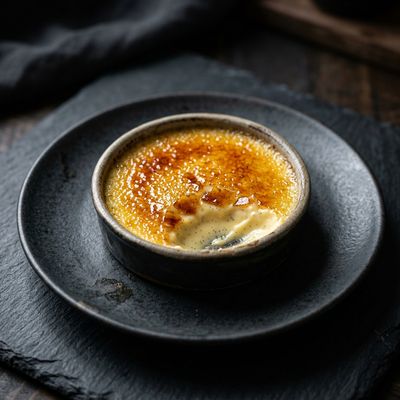
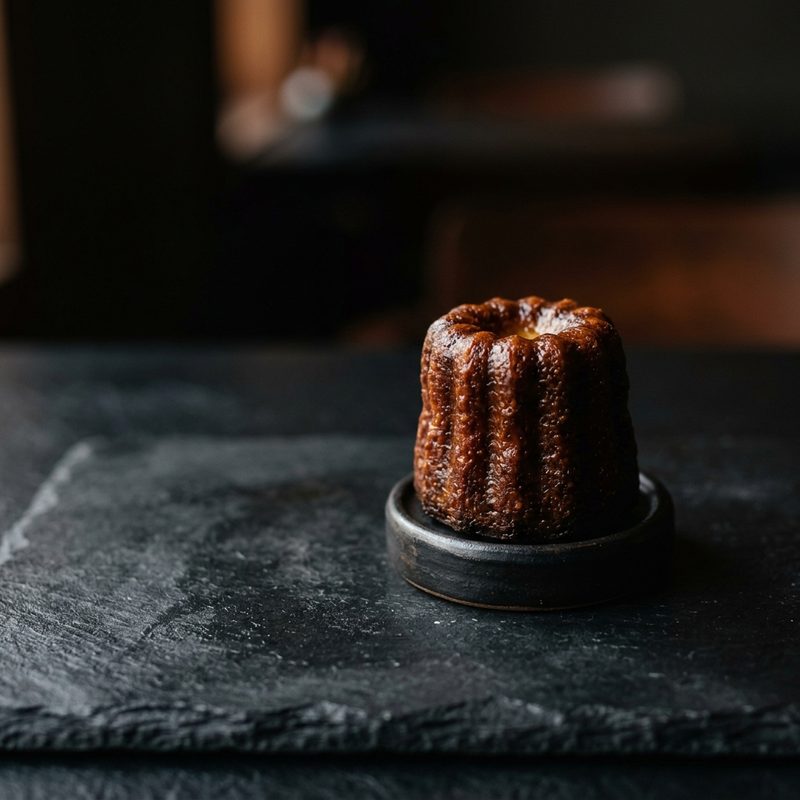
A Bordeaux classic featuring a dark, deeply caramelized mahogany crust and a moist, tender custard interior infused with rum and Tahitian vanilla. This recipe utilizes a meticulous 48-hour cold fermentation of 'l'appareil' to ensure a refined crumb and the signature structural integrity required for fine-dining service.
- Prep
- 20 min
- Cook
- 60 min
- Serves
- 12
- Level
- Advanced
- Per serving
- 185 kcal
Method
Preparation of the Appareil: Combine milk, 50g butter, and the scraped vanilla bean (husk included) in a heavy-bottomed saucepan. Bring to a gentle simmer (approx. 85°C/185°F). Remove from heat and infuse for 10 minutes.
Mixing the Base: In a large bowl, whisk the sifted flour and sugar. In a separate container, lightly beat the whole eggs and yolks without incorporating air. Slowly temper the warm milk mixture into the eggs, whisking gently to avoid creating foam.
Integration: Gradually fold the liquid egg mixture into the dry ingredients until just combined. Stir in the dark rum. Pass the entire batter through a fine-mesh chinois to ensure absolute homogeneity.
The Maturation: Transfer the batter to an airtight container and press plastic wrap directly onto the surface (cartouche) to prevent skin formation. Refrigerate for at least 24 hours, ideally 48 hours. This allows the flour to fully hydrate and the air bubbles to dissipate.
Chemisage (Coating): Melt the beeswax and 50g of clarified butter together in a double boiler until fully liquid. Heat your copper molds in a 100°C (210°F) oven for 5 minutes. Pour the hot wax mixture into one mold, fill to the top, then immediately pour it into the next. Invert the coated mold onto a wire rack to allow excess to drip off, leaving a paper-thin film. Repeat for all molds.
Baking Sequence: Preheat oven to 230°C (450°F). Gently stir the cold batter (do not whisk). Fill the chilled, wax-lined molds to 5mm from the rim. Bake at 230°C for 10 minutes to initiate the thermal shock necessary for the crust. Reduce heat to 180°C (350°F) and continue baking for 45-50 minutes until the tops are a very dark, mahogany brown.
Depanning: Immediately unmold the canelés while hot by tapping the molds onto a cooling rack. The wax will set as they cool, creating the signature crunch. Allow to rest for at least 1 hour before serving to let the interior custard set.
Notes
Copper molds are essential for the 'crust-shattering' texture; silicone can be substituted but you will lose the distinct caramelized crunch and gain a spongier exterior.
Beeswax is the secret to the shine and specific mouthfeel; if skipped, use only clarified butter, but expect the canelés to lose their crispness much faster.
Avoid whisking the batter after the rest period; any incorporated air will cause the canelés to 'mushroom' or rise out of the molds during baking.
The internal temperature of a perfectly cooked canelé should be approximately 92°C (198°F) when pulled from the oven.