Risotto and Pasta
Handmade Ricotta and Sage Agnolotti in Brown Butter Sauce
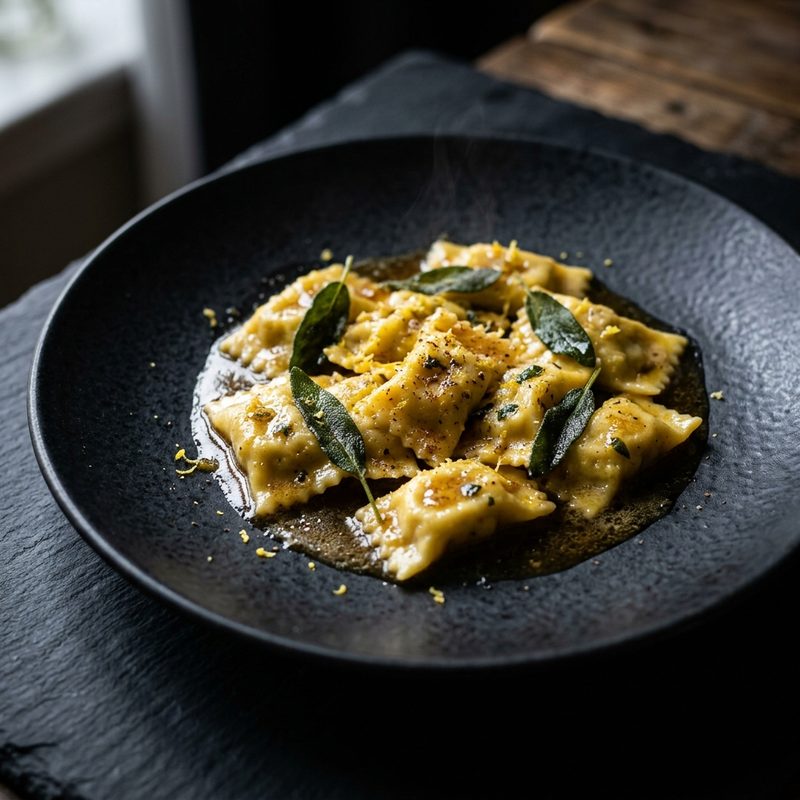
These delicate, hand-pinched agnolotti feature a velvety sheep's milk ricotta filling infused with the earthy aroma of fresh sage. Finished in a nutty beurre noisette, this dish represents the pinnacle of Piedmontese pasta craftsmanship, balancing rich egg yolks with bright citrus notes.
- Prep
- 90 min
- Cook
- 5 min
- Serves
- 4
- Level
- Advanced
- Per serving
- 540 kcal
Method
Prepare the Pasta Dough: Create a well with the 00 flour on a marble or wood surface. Pour the egg yolks into the center. Using a fork, gradually incorporate the flour into the yolks until a shaggy mass forms. Knead by hand for 10 minutes until the dough is silky and elastic (the 'spring-back' test). Wrap tightly in cling film and hydrate at room temperature for at least 60 minutes. Note: Using a food processor saves time but yields a less resilient gluten structure.
Create the Filling: Pass the drained ricotta through a fine-mesh sieve (tamis) to ensure a perfectly smooth texture. Finely chiffonade 4 sage leaves and fold them into the ricotta along with the Parmigiano-Reggiano, lemon zest, and a microplane-grating of nutmeg. Season with fine sea salt. Transfer to a pastry bag fitted with a small plain tip and refrigerate.
Sheet the Pasta: Divide the dough into four pieces. Using a pasta machine, roll the dough out to the thinnest setting (usually #8 or #9), ensuring the sheet remains translucent but manageable. Keep unused dough covered to prevent oxidation.
Form the Agnolotti dal Plin: Pipe a continuous line of filling across the lower third of the pasta sheet, or pipe small mounds 2cm apart. Fold the bottom edge of the pasta over the filling and seal it tightly, removing all air. Use your thumb and forefinger to 'plin' (pinch) the pasta between each mound of filling. Using a fluted pasta wheel, cut along the top of the fold and then between each pinch to create small, rectangular pouches with a distinct 'pocket'.
Beurre Noisette: In a large sauté pan, melt the butter over medium heat. Allow the milk solids to toast until they reach a deep amber color and smell of toasted hazelnuts. Immediately add the remaining sage leaves to crisp them and halt the browning process. Whisk in a splash of pasta cooking water to emulsify into a light sauce.
Final Assembly: Cook the agnolotti in a large pot of boiling, salted water (1% salinity) for approximately 90 seconds or until they float. Using a spider, transfer the pasta directly into the brown butter emulsion. Gently glaze the pasta over low heat for 30 seconds. Serve immediately with the crispy sage leaves and a final dusting of Parmigiano.
Notes
Draining the ricotta overnight in cheesecloth is non-negotiable for a stable filling that won't make the pasta soggy.
The 'Plin' pinch creates a small pocket that captures the sauce; ensure the seal is tight to prevent bursting during the boil.
If the dough feels too dry during kneading, spray it lightly with water rather than adding whole eggs to maintain the rich yolk ratio.
For a home simplification, use a round cutter to make simple ravioli, but you will lose the traditional sauce-catching 'pocket' of the agnolotti shape.