Guide
Sous Vide Temperatures and Times: A Professional Culinary Guide
Achieving the perfect cook requires more than just a timer; it requires an understanding of thermal equilibrium. This guide provides the exact temperatures used in fine-dining kitchens to transform proteins and vegetables into culinary benchmarks.
Section 1: The Principle of Thermal Equilibrium
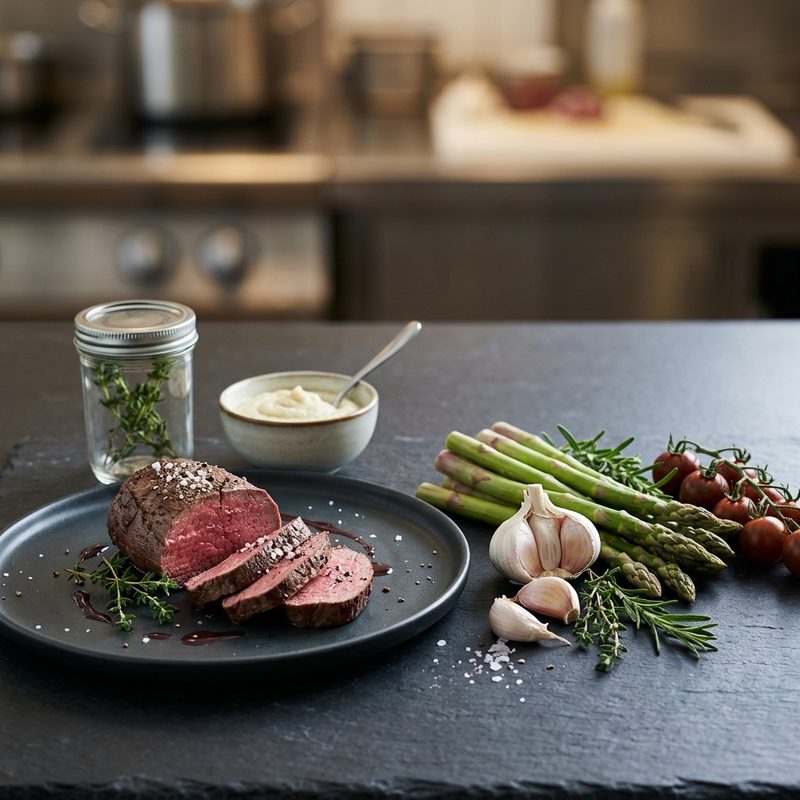
In a professional kitchen, we view sous vide not just as 'boiling in a bag,' but as reaching thermal equilibrium. Unlike a 200°C oven where you must pull the meat out at the exact second it hits its target, a water bath set to 54°C (129°F) ensures the protein never exceeds that temperature. For home cooks, the biggest simplification is using the 'water displacement method' with a heavy-duty freezer bag instead of a chamber vacuum sealer. While you lose the 'compression' effect that helps with quick-pickling or dense infusions, the thermal transfer remains 100% effective for cooking.
Section 2: Beef and Lamb - The Myoglobin Threshold
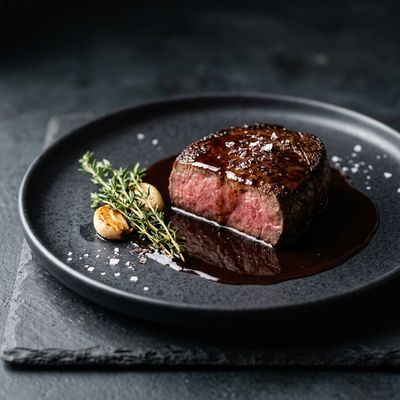
For red meats, the goal is to render intramuscular fat without tightening the protein fibers. For a perfect Medium-Rare, set your circulator to 54°C (129°F) for 2 to 4 hours. If you prefer Medium, 60°C (140°F) is the target. Anything above 65°C will cause the muscle fibers to contract and expel moisture, losing the benefit of the technique. Always season with salt and aromatics like thyme or garlic before bagging, but avoid adding raw butter, as it can actually dilute the beef's natural flavor profile during the long cook.
Section 3: Poultry - Redefining Doneness
Standard food safety guidelines recommend 74°C (165°F) for chicken, but this results in dry meat. In a controlled sous vide environment, pasteurization is a function of both temperature and time. We cook chicken breasts at 63.5°C (146°F) for 90 minutes. This produces a texture that is impossibly juicy and tender. If this texture feels too 'foreign' for home diners, move to 68°C (155°F), which bridges the gap between traditional and modernist textures. Always finish poultry with a high-heat sear on the skin side only to provide contrast.
Section 4: Seafood - The Delicate Protein Structure
Fish requires the most precision because its proteins (actin and myosin) denature at very low temperatures. For a 'mi-cuit' (half-cooked) salmon that melts like butter, set the bath to 45°C (113°F) for 30 to 45 minutes. For a more traditional flaky texture, 52°C (125°F) is the standard. Note that for seafood, you must use a brine (10% salt to water ratio) for 10 minutes prior to bagging to prevent the white albumin from leaching out and clouding the presentation.
Section 5: Vegetables and Pectin Breakdown
Unlike proteins, vegetables require high heat to break down pectin, the 'glue' that holds cell walls together. We set our baths to 85°C (185°F). Carrots and potatoes usually require 45 to 60 minutes. The advantage here is that the vegetables cook in their own sugars without being diluted by boiling water. At home, you can simplify this by using a standard pot of boiling water if you don't have a circulator that reaches high temps, but you lose the uniform texture that only a circulator provides.
Section 6: The Finish - The Maillard Reaction
Sous vide food looks unappealing when it leaves the bag. The final professional step is the 'hard sear.' Pat the protein bone-dry with paper towels—moisture is the enemy of a crust. Use a cast-iron skillet with a high-smoke-point oil (like grapeseed) and sear for no more than 45 seconds per side. You are not cooking the meat further; you are simply initiating the Maillard reaction for flavor and aesthetics.