Seafood and Shellfish
How to Make Restaurant-Quality Pan-Seared Scallops with Brown Butter
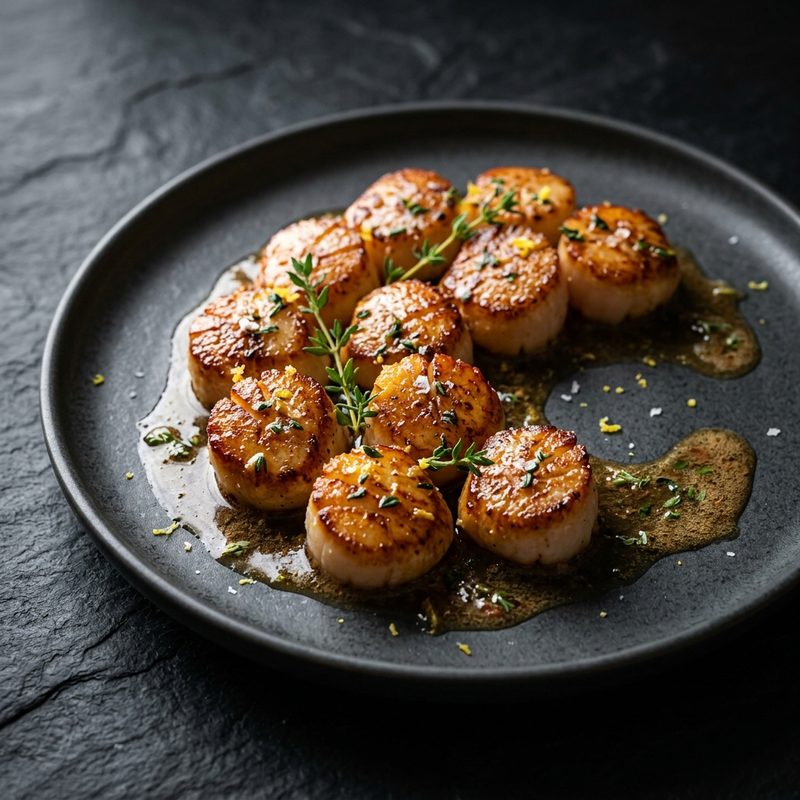
These pan-seared scallops are basted in a rich, nutty brown butter infused with fresh thyme and lemon. This technique yields a deep golden crust and a tender, translucent center that rivals any fine-dining establishment.
- Prep
- 15 min
- Cook
- 10 min
- Serves
- 4
- Level
- Intermediate
- Per serving
- 320 kcal
Method
Mise en Place: Remove the 'foot' (the small, tough adductor muscle) from the side of each scallop. Place scallops on a tray lined with paper towels and pat the surfaces extremely dry. Any surface moisture will cause the scallops to steam rather than sear.
Tempering: Allow the scallops to sit at room temperature for 10 minutes before cooking to ensure even heat penetration.
The Sear: Heat a heavy stainless steel or cast-iron skillet over high heat. Add the grapeseed oil and wait until it reaches the smoke point (light wisps of smoke). Season the presentation side (the flatter side) of the scallops generously with salt right before placing them in the pan.
Maillard Reaction: Place scallops seasoned-side down in the pan, ensuring they do not touch. Do not move them for 2 minutes. This develops the essential Maillard crust. If the scallops are forced off the pan surface before they naturally release, you will lose the crust.
The Flip and Arrosé: Flip the scallops once. Immediately reduce the heat to medium and add the butter and thyme sprigs to the pan. As the butter foams and turns a nutty brown (beurre noisette), tilt the pan and use a spoon to continuously baste the scallops with the hot fat for 45-60 seconds. This technique, called arrosé, cooks the center gently while adding flavor.
Finishing: Add a squeeze of lemon juice to the pan to stop the butter from burning. Remove the scallops immediately when the internal temperature hits 125°F (52°C). They should be opaque on the outside but slightly translucent in the very center.
Plating: Serve immediately, drizzling the remaining brown butter from the pan over the scallops and finishing with a touch of lemon zest and fleur de sel.
Notes
Always use 'dry' scallops. 'Wet' scallops are treated with phosphates that retain water, making a golden sear impossible.
If you lack the confidence for the 'arrosé' basting technique, you can simply flip the scallops and cook for 1 minute more, but you will lose the signature nutty depth and silky texture of the butter-basted finish.
The pan must be hot. If the oil isn't shimmering and slightly smoking, the scallops will stick and boil in their own juices.