Seafood and Shellfish
Steamed Halibut with Classic Beurre Blanc Sauce
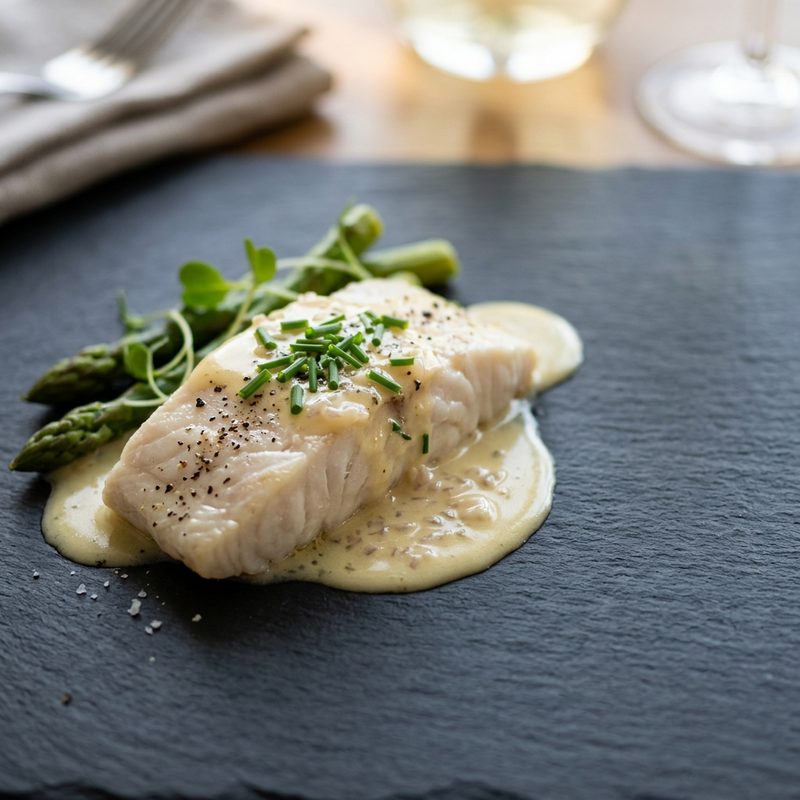
This dish features delicate, moisture-rich halibut fillets prepared using a gentle steaming technique to preserve their pristine white color and flake. It is finished with a classic French emulsion sauce that balances rich cultured butter with the sharp acidity of a white wine reduction.
- Prep
- 15 min
- Cook
- 20 min
- Serves
- 4
- Level
- Intermediate
- Per serving
- 485 kcal
Method
Temper the halibut fillets by removing them from refrigeration 15 minutes before cooking. Season lightly with fleur de sel.
Create the gastrique base by combining minced shallots, white wine, and vinegar in a small heavy-bottomed saucepan over medium-high heat. Reduce until the liquid is 'au sec' (almost dry), approximately 2 tablespoons of syrupy liquid should remain.
Add the heavy cream to the reduction and simmer for 30 seconds. This step is a restaurant 'stabilizer'—it prevents the sauce from splitting easily at home. (If omitted for a traditional method, the risk of breaking the emulsion increases).
Reduce the heat to the lowest possible setting. Begin the emulsion (monter au beurre) by whisking in two cubes of chilled butter at a time. Do not allow the sauce to boil, or the fat will separate. Continue until all butter is incorporated and the sauce is thick and glossy.
Strain the sauce through a fine-mesh chinois into a clean bowl to remove shallots for a perfectly smooth texture. If a rustic finish is preferred, skip straining. Stir in the sliced chives and lemon juice. Keep the sauce in a warm spot (ideally 45-50°C).
Prepare the steamer. Place the halibut on a perforated tray or in a bamboo steamer lined with parchment paper. Steam for 6-8 minutes, depending on thickness, until the internal temperature reaches exactly 52°C (125°F) for a translucent, buttery texture.
Plate the halibut in warmed shallow bowls. Nap the fish with the chive beurre blanc or pour the sauce around the base to showcase the pristine white fish.
Notes
Cold butter is non-negotiable; as it melts slowly, the milk solids act as an emulsifier for the fat.
If the sauce starts to look oily, it is too hot. Immediately whisk in a teaspoon of cold cream or a ice cube to bring the temperature down and re-emulsify.
To simplify at home, you can leave the shallots in the sauce, but you will lose the 'silk' mouthfeel characteristic of fine dining.
Do not overcook the halibut; it continues to carry-over cook after being removed from the steam.