Seafood and Shellfish
Langoustine with Bisque Emulsion Recipe
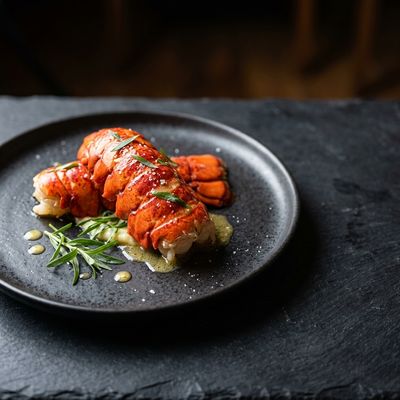
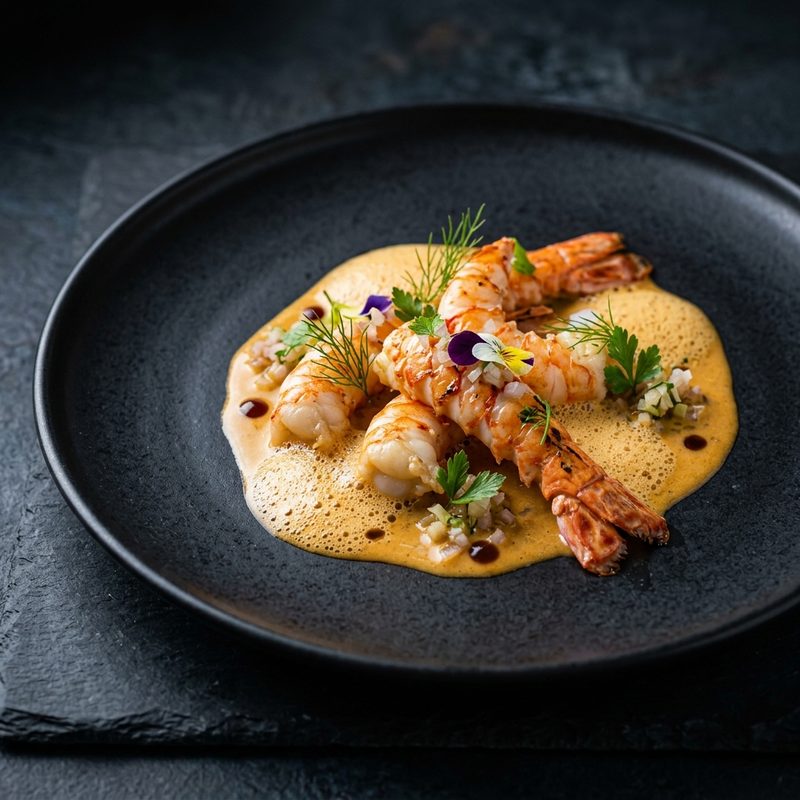
Experience the pinnacle of seafood elegance with succulent langoustine tails gently poached in a temperature-controlled beurre monté. The dish is finished with a hyper-concentrated, aerated bisque emulsion that captures the deep, toasted essence of the shells.
- Prep
- 30 min
- Cook
- 45 min
- Serves
- 4
- Level
- Advanced
- Per serving
- 480 kcal
Method
Separate the langoustine tails from the heads. Peel the tails carefully to keep the end-fin attached for presentation, remove the intestinal tract (devein), and reserve the meat in the fridge. Crush all shells and heads into small pieces to maximize surface area.
In a heavy-bottomed rondeau, heat 30g of butter until foaming. Add the crushed shells and roast over high heat until they turn deep orange and smell toasted. Add the shallots, fennel, and star anise; sweat until translucent.
Degrease the pan if necessary, then add tomato paste and cook for 2 minutes (pincé) until it darkens. Deglaze with Cognac and flambé. Add the white wine and reduce by half. Add just enough water or light fish stock to barely cover the shells. Simmer for 20 minutes; do not exceed this time or the shells will impart a bitter, chalky flavor.
Pass the liquid through a chinois or fine-mesh sieve into a clean saucepan, pressing hard on the solids. Reduce this liquid until it coats the back of a spoon. Stir in the heavy cream and bring to a simmer. Season with sea salt and a drop of lemon juice. Keep warm.
Prepare a beurre monté for poaching: bring 2 tablespoons of water to a boil in a small saucepan, then whisk in the remaining cold butter one cube at a time to create a stable emulsion. Maintain the temperature between 58°C and 62°C (136°F - 144°F).
Submerge the langoustine tails in the beurre monté for 3 to 4 minutes. The internal temperature of the meat should reach 52°C (125°F) for a perfect 'mi-cuit' texture.
Use an immersion blender to aerate the warm bisque sauce until a stable foam (emulsion) forms on the surface.
Place four poached tails in the center of a warm shallow bowl. Spoon the concentrated bisque over the base and top with a generous amount of the emulsion foam. Garnish with fennel fronds if desired.
Notes
To simplify, you can use high-quality store-bought lobster stock, but you will lose the 'roasted' depth provided by fresh shells.
The secret to a fine-dining emulsion is the 'pincé' of the tomato paste; ensure it turns a rusty brick color before adding liquids.
If your beurre monté breaks (separates), whisk in a teaspoon of warm water to bring the emulsion back together.
Temperature is critical: if the poaching butter exceeds 65°C, the langoustine will become rubbery and lose its sweetness.