Terrines and Parfaits
Classic French Game Terrine with Pistachios and Smoked Bacon
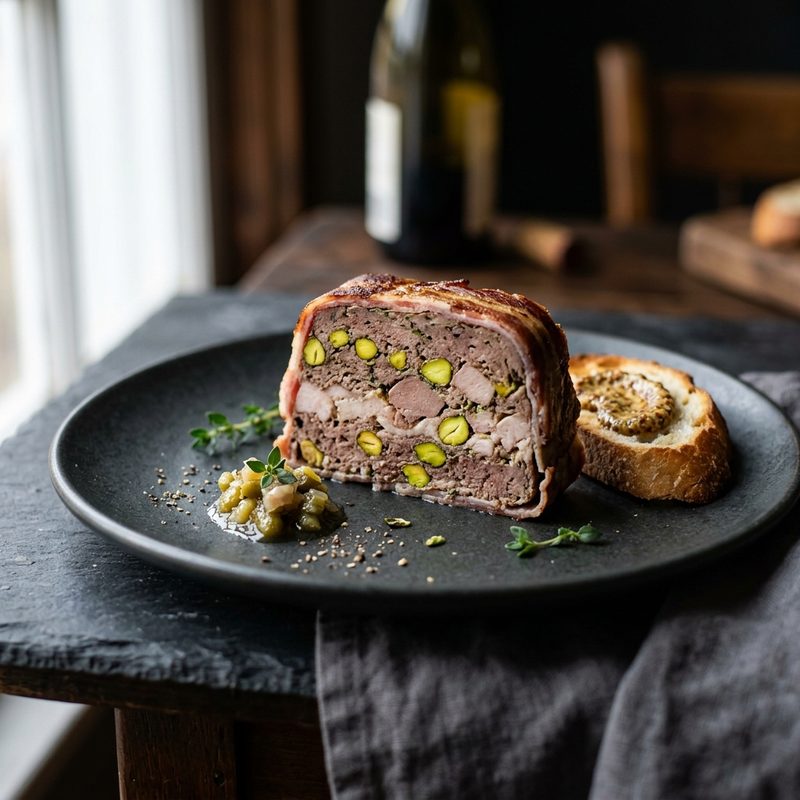
This rustic yet refined terrine balances the deep, earthy flavors of venison and pheasant with the buttery crunch of toasted pistachios. Encased in smoked bacon and pressed to perfection, it represents the pinnacle of traditional French charcuterie technique.
- Prep
- 45 min
- Cook
- 90 min
- Serves
- 10
- Level
- Advanced
- Per serving
- 340 kcal
Method
Marinade (Maceration). In a large non-reactive bowl, combine the minced venison, minced pork fat, Armagnac, Port, sea salt, curing salt, Quatre Épices, shallots, and thyme. Mix thoroughly by hand. Cover and refrigerate for at least 12 hours (ideally 24) to develop flavor and cure the meat. Marinate the pheasant strips separately in a splash of Port and salt.
Temperature Control. Ensure all ingredients and your mixing bowl are ice-cold. If the fat warms up during mixing, the terrine will 'break' (leak fat) during cooking. Set your oven to 140°C (285°F).
Creating the Farce. Add the beaten eggs to the chilled venison mixture. Using a heavy-duty stand mixer with the paddle attachment or a cold spatula, beat the mixture vigorously for 2-3 minutes until it becomes tacky and emulsified. Fold in the whole pistachios.
Lining (Chemiser). Grease a 1.5-liter terrine mold. Line the mold with the bacon slices, overlapping slightly and leaving enough overhang to cover the top later. Ensure there are no gaps.
Layering. Pack half of the venison farce into the mold, pressing down firmly to remove air pockets. Lay the pheasant strips lengthwise down the center. Top with the remaining farce and smooth the surface. Fold the overhanging bacon over the top. Cover with a lid or a double layer of foil.
Bain-Marie. Place the terrine in a deep roasting tray. Pour boiling water into the tray until it reaches halfway up the sides of the mold. Bake for approximately 75–90 minutes, or until the internal core temperature reaches 68°C (155°F).
Pressing. Remove from the oven and the water bath. Let it sit for 30 minutes. Place a piece of cardboard cut to fit the inside of the mold over the meat, and place about 1kg (2 lbs) of weights (e.g., canned food) on top. Refrigerate while weighted for at least 24 hours. This compacts the meat and forces out excess air.
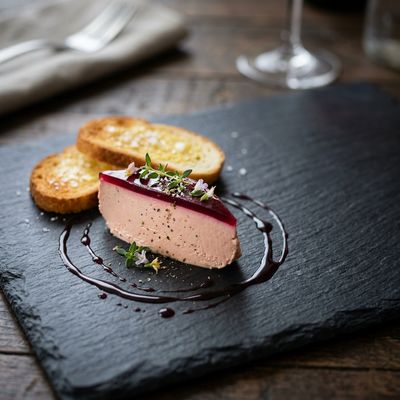
Serving. To unmold, dip the base of the mold briefly in hot water. Invert onto a board. Slice with a very sharp, thin-bladed knife and serve with cornichons and toasted sourdough.
Notes
Always perform a 'fry-test': take a small spoonful of the raw farce, fry it, and taste for seasoning before filling the mold. You cannot adjust seasoning once it is cooked.
The use of Pink Curing Salt (Nitrite) is what keeps the game meat a vibrant rosy pink. If you omit it, the terrine will be delicious but will turn a dull grey-brown color.
If you don't have a meat grinder at home, ask your butcher to grind the venison and pork fat together on a medium die.
Simplification: You can skip the 'pressing' step if you prefer a looser, more rustic texture, but you will lose the clean, professional 'slice' seen in fine-dining presentations.