Stocks, Sauces and Fundamentals
Professional Chicken Velouté Sauce Recipe
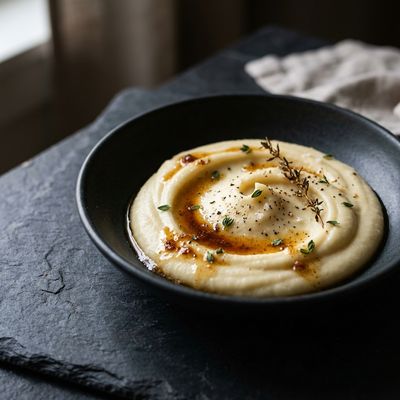
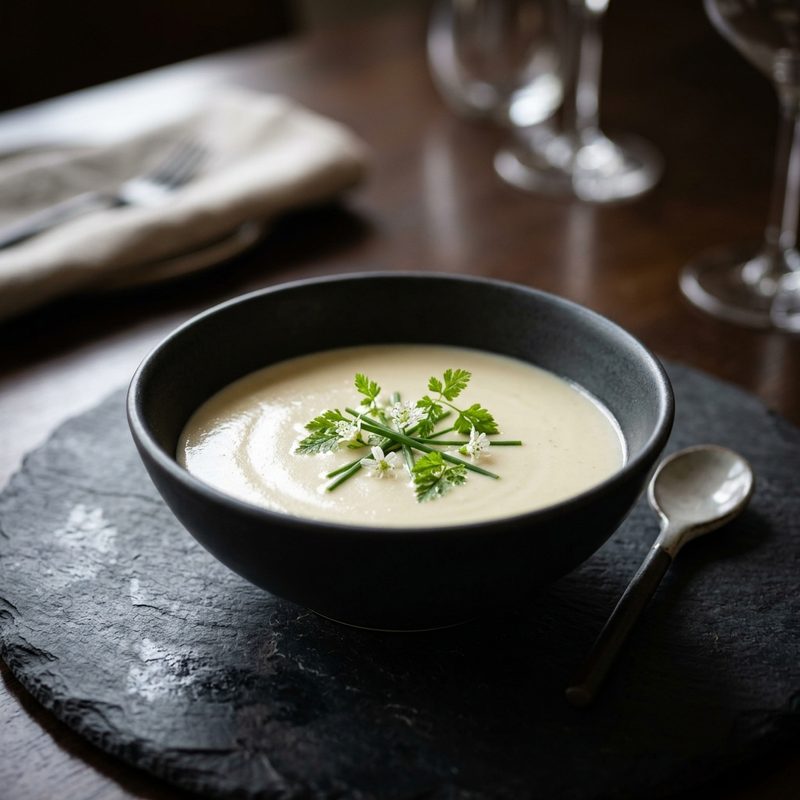
A foundational pillar of French gastronomy, this chicken velouté is a silky, ivory-colored sauce with a deep poultry essence. Crafted from a blond roux and high-quality white chicken stock, it serves as a luxurious finish for roasted meats or the perfect base for numerous derivative sauces.
- Prep
- 10 min
- Cook
- 35 min
- Serves
- 4
- Level
- Intermediate
- Per serving
- 160 kcal
Method
Mise en Place: Bring the white chicken stock to a gentle simmer in a secondary saucepan. Maintaining a hot liquid is critical for a smooth emulsion when added to the roux.
The Blond Roux: In a heavy-bottomed saucepan over medium-low heat, melt the unsalted butter. Once the foaming subsides, incorporate the flour. Stir constantly for 3 to 5 minutes until the roux smells slightly nutty and reaches a 'blond' stage (pale gold). Do not allow it to brown.
Incorporation: Gradually add the hot stock to the roux, one ladle at a time. Whisk vigorously after each addition to ensure the starch granules are fully suspended before adding more liquid.
Depouillage: Bring the sauce to a slow simmer (approximately 85-90°C). Reduce heat to the lowest possible setting. Cook for 30 minutes, frequently skimming off the 'skin' and impurities that rise to the surface to ensure a clean flavor and clear finish.
Finishing: Test for nappe consistency—the sauce should evenly coat the back of a spoon. Season with kosher salt and finely ground white pepper.
Refinement: For a true restaurant finish, pass the sauce through a fine-mesh chinois. If simplifying for home use, skip the chinois, but accept a slightly less uniform texture.
Notes
Always use white chicken stock rather than brown stock to maintain the characteristic ivory color of a velouté.
The 30-minute simmer is mandatory; it allows the flour's starch to fully hydrate and eliminates any raw cereal taste.
Using white pepper instead of black pepper is a professional standard to avoid dark specks in the pristine sauce.
If the sauce becomes too thick during the reduction, adjust the viscosity by whisking in small amounts of hot stock.