Meat and Game
Exquisite Chicken Ballotine with Morel Mushroom Filling
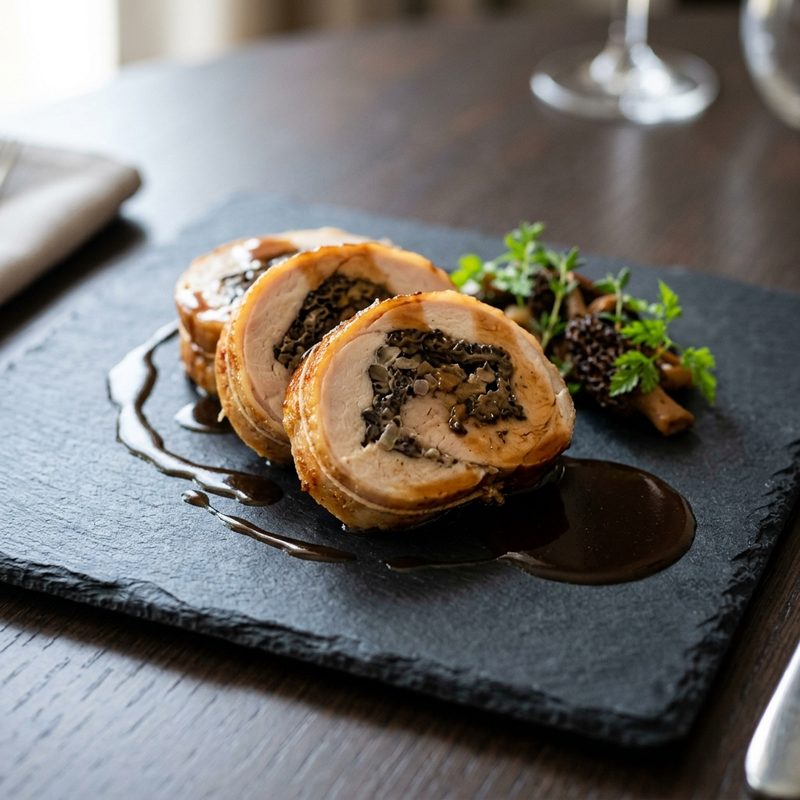
A refined French classic featuring succulent deboned chicken stuffed with a delicate truffle-like morel mousseline. This dish demonstrates the pinnacle of poultry preparation, yielding a perfectly uniform cylinder of meat paired with a glossy Madeira reduction.
- Prep
- 60 min
- Cook
- 45 min
- Serves
- 4
- Level
- Advanced
- Per serving
- 620 kcal
Method
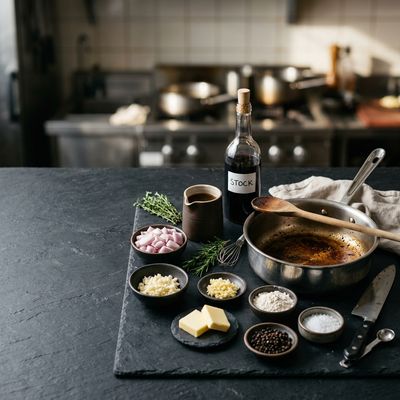
Rehydrate the morels in warm water for 20 minutes. Strain through a coffee filter to reserve the liquid and finely chop the mushrooms.
Prepare the morel duxelles by sweating shallots in 15g of butter until translucent. Add the chopped morels and sauté until all moisture has evaporated. Deglaze with 30ml of Madeira, reduce to a glaze, and chill completely.
Create the Mousseline. Place the chilled chicken breast in a food processor with a pinch of salt. Pulse until smooth. Add the egg white and process briefly. With the motor running, slowly stream in the chilled cream until emulsified. Pass the mixture through a fine tamis (drum sieve) into a bowl set over ice. Fold in the chilled morel duxelles.
Prepare the ballotine. Lay a large sheet of high-quality cling film on the work surface. Place a deboned chicken leg skin-side down. Season the meat. Pipe or spread a thick log of the mousseline across the center. Roll the chicken tightly using the cling film to form a uniform cylinder. Twist the ends of the film to compress the meat, securing with knots.
Poach the ballotines in a water bath (sous-vide) at 65°C (149°F) for 45 minutes. Alternatively, poach in barely simmering water, ensuring the internal temperature reaches 64°C. Remove and rest for 10 minutes.
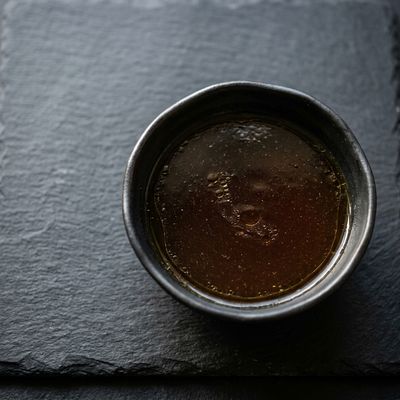
Make the Madeira Jus. Combine the reserved morel soaking liquid, remaining Madeira, and chicken stock. Reduce by two-thirds until syrupy. Whisk in the remaining cold butter (monter au beurre) to finish.
Finish the chicken. Carefully remove the cling film. Sear the ballotines in a hot pan with a neutral oil until the skin is golden and crisp. Carve into thick medallions and serve with the jus.
Notes
Temperature control is vital for the mousseline; if the chicken or cream is warm, the emulsion will 'break' and become grainy.
Passing the mousse through a tamis is the difference between a home-style stuffing and a restaurant-grade mousseline. Skipping this results in a loss of that signature velvety texture.
Use 'double-wrapping' with cling film to ensure no water enters the ballotine during the poaching process.
For the best sear, pat the poached ballotines extremely dry with paper towels before they hit the pan.