Vegetables and Garnishes
Professional Braised Baby Artichokes Barigoule Recipe
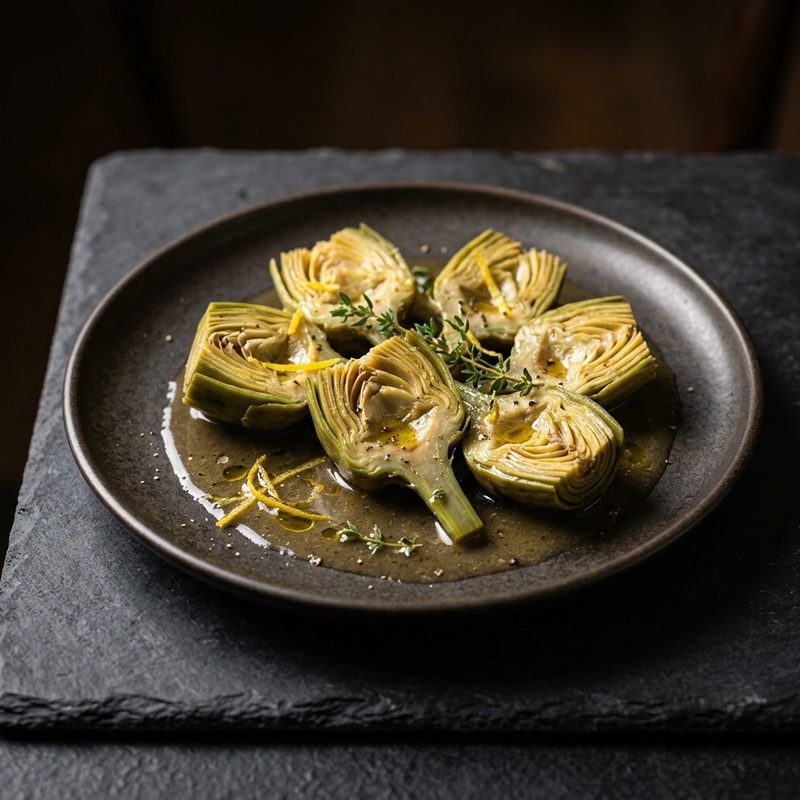
These baby artichokes are prepared in the classic 'à la Barigoule' style, featuring a delicate balance of acidity and herbal notes. The process ensures a buttery, tender texture and a bright, translucent glaze that elevates this seasonal vegetable to a fine-dining centerpiece.
- Prep
- 25 min
- Cook
- 20 min
- Serves
- 4
- Level
- Intermediate
- Per serving
- 165 kcal
Method
Prepare acidulated water by combining 1 liter of cold water with the juice of half a lemon. This prevents enzymatic browning during the trimming process.
Trim the artichokes (the 'turning' technique). Snap off the tough, dark green outer leaves until you reach the pale, tender inner bracts. Use a paring knife to peel the fibrous outer skin from the stem and the base. Slice off the top 1/2 inch of the flower and halve each artichoke vertically. Place immediately into the acidulated water.
In a wide rondeau or heavy-bottomed sauté pan, heat olive oil to 140°C (285°F). Add the minced shallots and smashed garlic. Sweat for 4 minutes until translucent; do not allow the aromatics to take on color.
Drain the artichokes and pat dry. Place them in the pan, cut-side down. Increase the heat to medium and cook for 2 minutes until the cut side is very lightly blonde.
Deglaze the pan with the white wine. Reduce the liquid by half (reduction à l'anglaise) to concentrate the flavor and cook off the raw alcohol bite.
Add the stock, thyme sprigs, lemon zest, and a pinch of salt. The liquid should reach approximately halfway up the sides of the artichokes.
Cover the surface of the liquid with a cartouche (a parchment paper lid with a small hole in the center). Simmer at a constant 90°C (195°F) for 12–15 minutes.
Test for doneness by inserting a paring knife into the base; it should meet no resistance. Remove the cartouche and increase the heat for the final 2 minutes to emulsify the cooking liquid into a syrupy glaze. Season with white pepper and additional salt if required.
Notes
Always use a cartouche (parchment lid) rather than a standard metal lid; it allows for controlled evaporation while keeping the artichokes submerged, ensuring they don't oxidize and turn grey.
The 'turning' of artichokes is the most critical step for aesthetics. Use a sharp birds-beak knife if available for a smoother, rounded finish on the base.
If simplifying for home, you can skip peeling the stems and simply remove them, though you lose the classic visual appeal and the delicious 'marrow' of the stem.
Ensure you use white pepper instead of black to maintain the pristine, clean appearance of the pale yellow hearts.